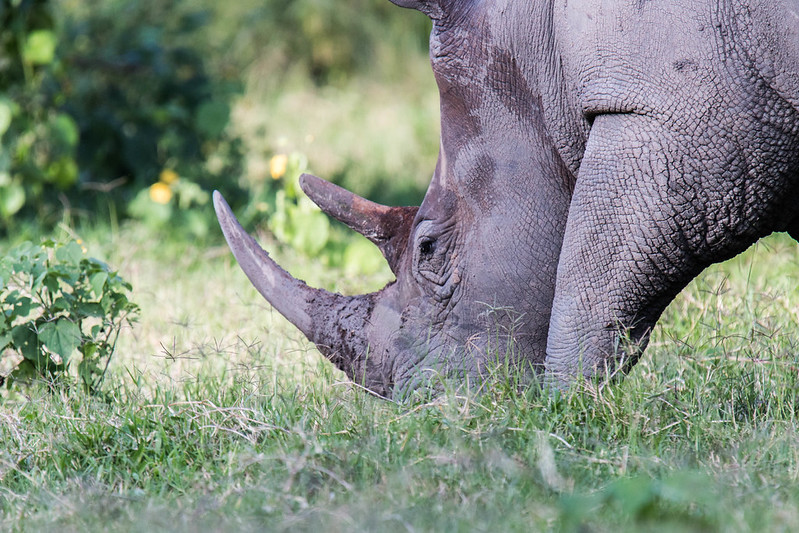
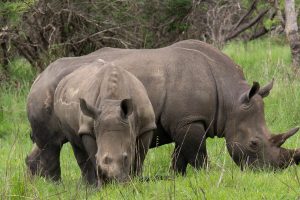
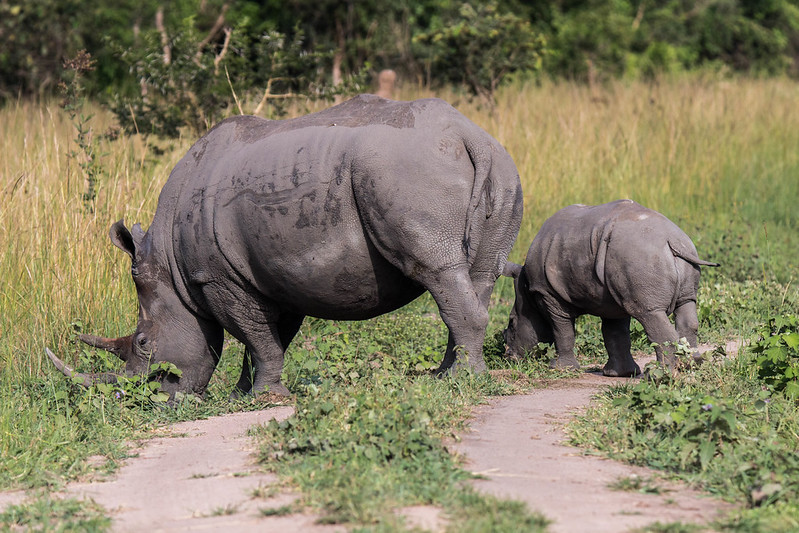
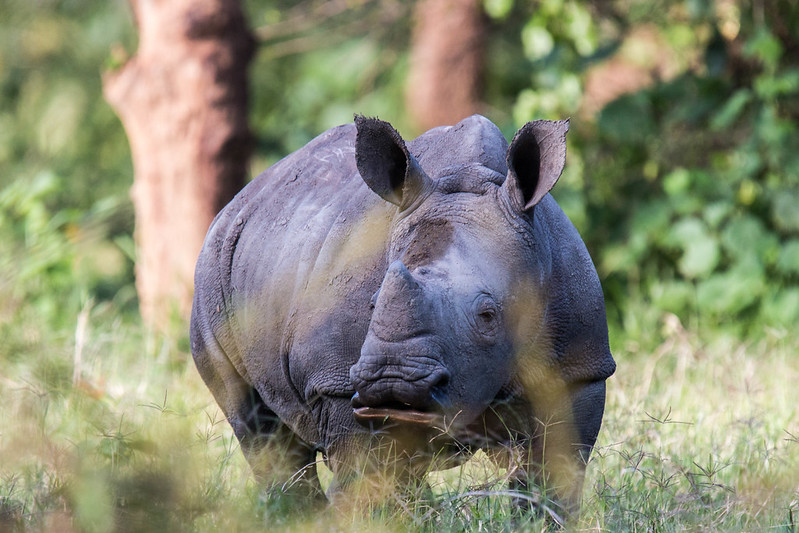
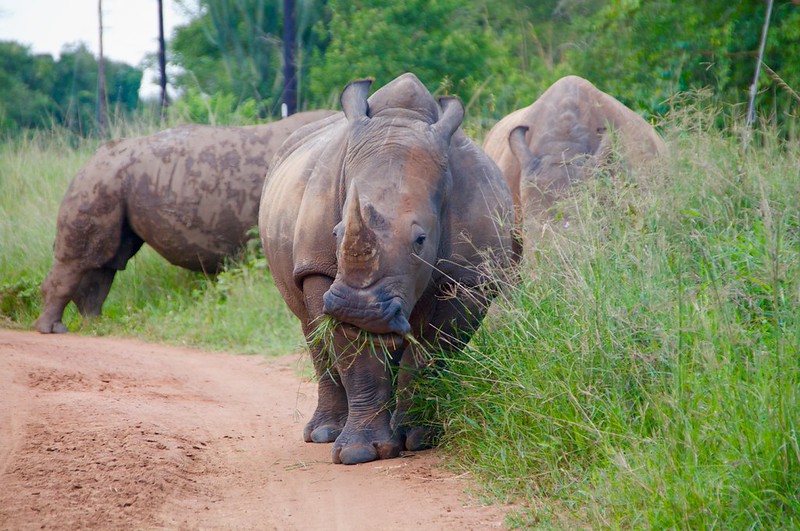
Welcome to Ziwa Rhino Sanctuary, the only home to wild southern white rhinos in Uganda.
Spanning 7,000 hectares of savannah and acacia woodlands, this sanctuary is a vital conservation treasure.
Whether you are on a quest to see the “Big Five” or simply looking for a premier wildlife encounter, tracking these prehistoric giants on foot is a bucket-list experience you cannot miss.
Where is the Sanctuary Located?
Ziwa Rhino sanctuary Uganda is located in the Nakasongola district and serves as the epicenter of rhino reintroduction in the country. Following the extinction of rhinos in Uganda in 1982 due to poaching and conflict, the sanctuary was established in 2005 to bring them back. Today, the population has grown from the initial six rhinos to over 30, making it a world-class success story for Uganda wildlife conservation.
2026 Activity Rates & Entry Fees
Understanding the Ziwa Rhino Sanctuary prices helps travelers plan their safari budget effectively. Entry and activity fees are tiered based on residency status.
The Ziwa rhino sanctuary location is situated in Nakasongola, approximately 176km north of Kampala. It sits conveniently along the Gulu Highway, which leads to Murchison Falls National Park. Its strategic position makes it the perfect midpoint stopover for travelers looking to break up the long drive to northern Uganda.
Travel Times and Road Conditions from Kampala
The Distance from Kampala to Ziwa Rhino sanctuary is 176 kilometers (109 miles). On average, the drive takes 3 to 4 hours depending on the traffic exiting Kampala. The road is fully paved and in excellent condition, making it accessible for all vehicle types, though a 4×4 is always recommended for the internal sanctuary tracks.
Where to Stay: Lodges and Camping Options
If you wish to immerse yourself in the wilderness, Ziwa Rhino Sanctuary accommodation offers options for every budget. Staying inside the sanctuary gives you the rare chance to hear the rhinos grazing near your room at night.
Amuka Wildlife Lodge: A high-end lodge featuring secluded stone chalets, a swimming pool, and excellent cuisine.
Ziwa Guesthouse: A comfortable mid-range option perfect for families and small groups.
Camping Grounds: Budget-friendly and well-maintained sites with shared facilities for those seeking a true bush experience.
How to Book Your Permits and Entry
You can obtain Ziwa rhino sanctuary tickets directly at the reception upon arrival. However, during the peak seasons (June–September and December–February), it is wise to book in advance through your tour operator. The sanctuary accepts US Dollars (post-2021 series), Ugandan Shillings, and major credit cards (subject to a small surcharge).
The Story Behind the Sanctuary: Ownership and Management
A common question asked by visitors is: Who owns Ziwa Rhino Sanctuary? The sanctuary is a collaborative effort between the private sector and the government. The land is privately owned by Captain Joe Roy, who generously provided it for conservation. The project is managed by Rhino Fund Uganda (a non-profit) in partnership with the Uganda Wildlife Authority (UWA), which provides the armed rangers for 24/7 security.
How Your Visit Supports Vital Conservation Efforts
The survival of the Southern White Rhino in Uganda is not merely a biological success story; it is a testament to the powerful synergy between sustainable tourism and frontline conservation. At Ziwa Rhino Sanctuary, every visitor plays a direct role in the protection and expansion of one of Africa’s most endangered species.
Tourism as a Shield for Conservation
Conservation is an expensive undertaking. To keep the rhinos safe, Ziwa Rhino Sanctuary employs a dedicated team of over 80 armed rangers who provide 24/7 security. This constant surveillance is the primary reason the sanctuary has maintained a zero-poaching record since its inception.
Tourism at the sanctuary does more than just pay for fences. It creates a “conservation economy” for the surrounding Nakasongola community. By staying in Ziwa Rhino Sanctuary accommodation or hiring local guides, travelers provide livelihoods for hundreds of families. When local communities see the tangible economic benefits of a living rhino—through jobs and community projects—they become the strongest allies in the fight against poaching.
Education through Encounter
The “on-foot” tracking experience at Ziwa Rhino Sanctuary serves a higher purpose: emotional connection.
Reading about conservation is one thing, but standing 10 meters away from a 2.5-ton rhino creates an advocate for life.
This educational tourism ensures that the story of Uganda’s rhinos travels across the globe, inspiring international support and funding for larger reintroduction projects, such as the future goal of moving these rhinos into Murchison Falls National Park.
A Sustainable Future
By choosing to visit Ziwa Rhino Sanctuary Uganda, you are not just a spectator; you are a patron of a biological legacy.
Sustainable tourism ensures that the sanctuary remains self-sufficient, reducing its reliance on unpredictable grants and ensuring that the rhinos can continue to breed and thrive until they are ready to reclaim their ancestral lands across the
Craft your ultimate African odyssey with the help of our local specialists. With decades of collective expertise in Uganda’s wild heart, we transform your vision of the perfect wildlife adventure into a seamless, life-changing reality. Whatever your quest, our team is here to guide you every step of the way.