
What is the Best Time to See Wildebeest Migration in Serengeti?
However, because this is a year-round, cyclical journey driven entirely by rainfall and the search for fresh grass, the animals do not stay in one place. If you book your safari for the wrong month or the wrong region of the park, you risk missing the massive mega-herds entirely.
If you are asking, what is the best time to see wildebeest migration in serengeti, this comprehensive guide breaks down the wildlife calendar by season, location, and behavior, followed by a customizable itinerary you can book directly.
The Serengeti Migration Calendar: Month-by-Month
To witness the migration, you must align your travel dates with the correct geographic sector of the Serengeti ecosystem.
| Month Range & Serengeti Region | Core Wildlife Spectacle |
|---|---|
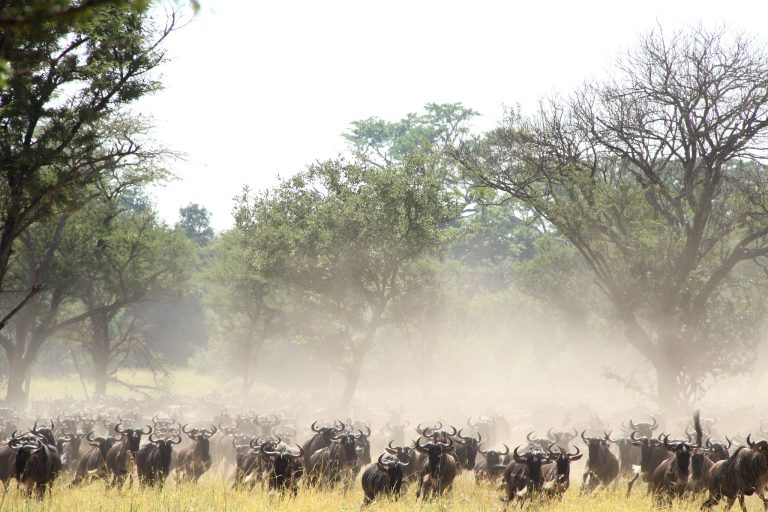
| January – March Southern Serengeti & Ndutu | The Calving Season The herds settle on the short-grass plains. Around 500,000 calves are born within a three-week window, triggering intense predator encounters with lions, cheetahs, and leopards. |
| April – May Central Serengeti (Seronera) | The Trek North Heavy rains prompt the herds to move northwest. The columns stream through the central valley. Excellent for uncrowded game viewing and lush, green photography. |
| June Western Corridor (Grumeti) | The Grumeti River Crossings The migration gathers along the south banks of the Grumeti River. Sneak-peak river crossings occur here against giant Nile crocodiles. |
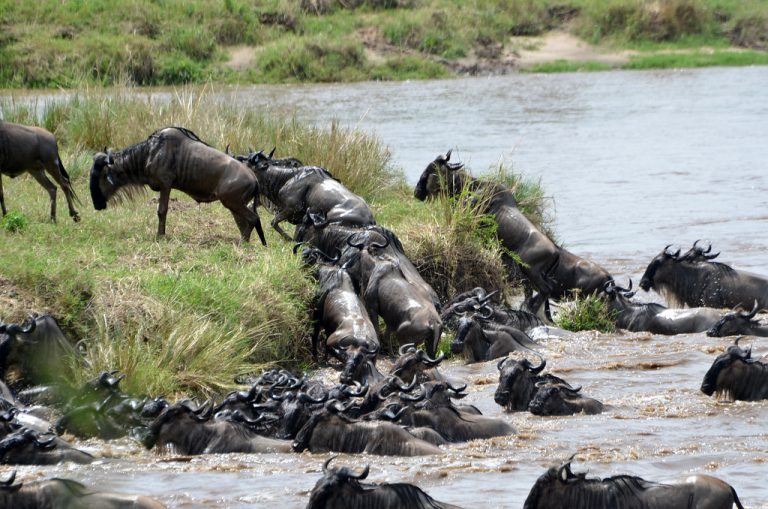
| July – October Northern Serengeti (Kogatende) | The Mara River Crossings The iconic, high-drama event. Millions of wildebeest mass on rocky banks before plunging through deep, crocodile-infested waters to cross into the Masai Mara. |
| November – December Eastern Serengeti | The Return Journey The short rains trigger a rapid southern march. The herds move down the eastern boundaries of the park to reset the cycle on the southern plains. |
Choose Your Experience: Peak Migration Seasons
Depending on what kind of safari experience you want, there are two distinct “best times” to book:
The Drama & Action: July to October
- Why go: This is the most famous phase of the journey. If you want to see jaw-dropping river crossings, dust-filled banks, and high-stakes survival, the northern Serengeti from July to October is your target window.
- Keep in mind: This is peak safari season; it requires booking accommodations up to a year in advance.
The Predators & New Life: January to March
- Why go: If you want to see massive concentrations of animals anchored in one place without driving long distances, the southern plains during the calving season are magical. The high concentration of vulnerable calves brings out the big cats in full force.
- Keep in mind: The weather is warm and dry, making it excellent for walking safaris around the Ndutu area.
Book Your Custom Migration Safari: 6-Day Tailored Itinerary
This classic lodge and luxury tented camp itinerary can be dynamically adjusted depending on your chosen travel dates. When you book, our ground experts automatically position your accommodation in the exact sector where the mega-herds are currently located.
Day 1: Arrival & Tarangire National Park
- Morning: Pick up from Kilimanjaro International Airport (JRO) or Arusha. Drive to Tarangire National Park, famous for its giant baobab trees and massive elephant herds.
- Afternoon: Full afternoon game drive along the Tarangire River.
- Overnight: Luxury Safari Lodge in Tarangire/Karatu.
Day 2: The Ngorongoro Crater Floor
- Morning: Descend 600 meters into the historic Ngorongoro Crater, a pristine volcanic caldera.
- Afternoon: Enjoy a dramatic game drive inside the crater floor. This is your best chance in East Africa to spot all of the “Big Five” (including the rare black rhino) in a single morning.
- Overnight: Rim-view luxury camp or Karatu highlands lodge.
Day 3: Journey into the Serengeti Migration Hub
- Morning: Depart the highlands and enter the Serengeti plains.
- Afternoon: Transition game drive directly into your chosen migration region.
- Your Selection:
- Traveling Jan–Mar? Head straight to the Southern Plains/Ndutu.
- Traveling Apr–Jun? Head to the Central/Western Corridor.
- Traveling Jul–Oct? Fly or drive straight to the Northern Kogatende Sector.
- Overnight: Mobile Luxury Tented Camp (positioned directly in the path of the herds).
Day 4: Full Day Migration Tracking & Photography
- Morning: Early morning bush breakfast followed by a full-day tracking expedition.
- Afternoon: Sit patiently by known crossing points (if in the North) or follow the calving herds across the savannah (if in the South).
- Overnight: Mobile Luxury Tented Camp.
Day 5: Deep Wilderness Exploration
- Morning: Optional dawn hot-air balloon safari floating over the moving herds, followed by a champagne breakfast.
- Afternoon: Explore hidden kopjes (rocky outcrops) where resident lions and leopards lounge, waiting for the migration columns to pass by.
- Overnight: Mobile Luxury Tented Camp.
Day 6: Final Game Drive & Departure
- Morning: Enjoy a final golden-hour game drive as the sun rises over the Serengeti.
- Afternoon: Game drive en route to the airstrip for a domestic flight back to Arusha/Kilimanjaro, or begin the scenic drive back via the Rift Valley viewpoint.
Ready to book this migration package? Contact our travel specialists today to lock in your preferred travel window, select your luxury camp tier, and secure your permits for the ultimate African wildlife spectacle.