
What Are Elephant Tusks Made Of? The Science of Ivory and the Perfect Uganda Conservation Journey
When you look at a majestic African elephant navigating the savannahs of Queen Elizabeth National Park or marching through the bush of Murchison Falls, your eyes are naturally drawn to their magnificent, sweeping tusks. But a fundamental question often arises for travelers, conservationists, and curious minds alike: what are elephant tusks made of?
Understanding the exact biological composition of elephant tusks reveals why these animals are uniquely targeted by poachers, and underscores why active conservation tourism is critical to ensuring their survival.
In this comprehensive guide, we will break down the exact anatomy of elephant ivory, compare it to other skeletal structures, and introduce you to an immersive, life-changing 7-Day Elephant Conservation and Wildlife Safari designed to help protect these gentle giants in Uganda’s wild spaces.
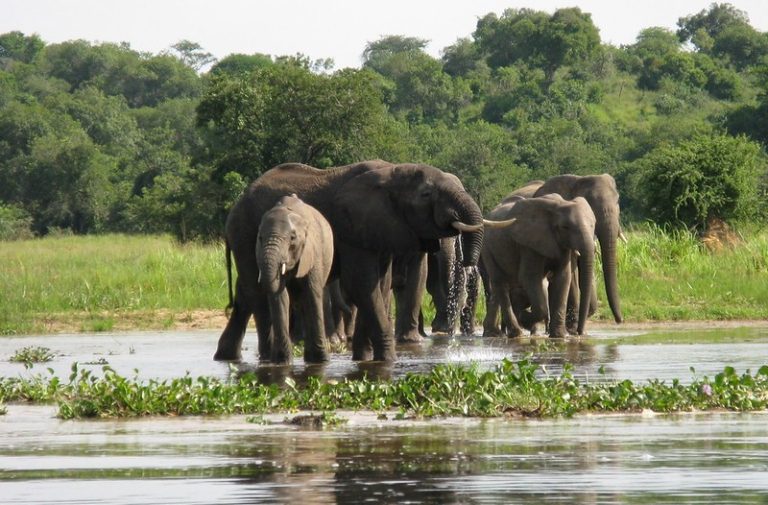
The Core Answer: What Are Elephant Tusks Made Of?
To put it in the simplest scientific terms: elephant tusks are made of dentine.
Tusks are not external horns, nor are they made of bone. Biologically, an elephant’s tusks are enormously elongated incisor teeth that embed deep within the animal’s skull. Just like human teeth or the teeth of other mammals, they consist of specific layers of organic and inorganic material, with dentine forming the overwhelming bulk of the structure.
When people use the word “ivory,” they are simply referring to the chemical and structural form of dentine found specifically within the tusks of elephants (and a few other animals like walruses, hippos, and narwhals).
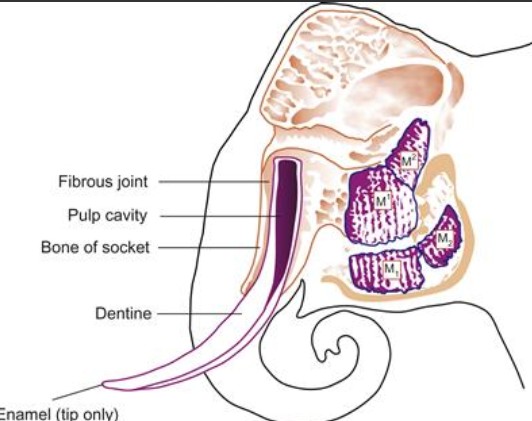
The Structural Anatomy of a Tusk
If you were to look at a cross-section of an elephant tusk, you would find a complex living structure rather than a solid, dead block of calcium:
- The Pulp Cavity: The inner third of an elephant’s tusk is entirely hollow on the inside of the skull. This area contains the pulp cavity, filled with a dense network of blood vessels, tissue, and nerves. This means that a tusk is a living, growing organ.
- The Dentine Layer: Surrounding the central nerve center is a massive layer of dentine. Dentine is a calcified tissue comprised of microscopic channels known as dentinal tubules. This gives ivory its unique elasticity and strength.
- The Cementum Layer: Unlike normal teeth, which are heavily coated in protective enamel, an adult elephant’s tusk is mostly covered by a thin, bone-like outer layer called cementum. Enamel is only present at the very tip of a young elephant’s tusk and quickly wears away as they use them.
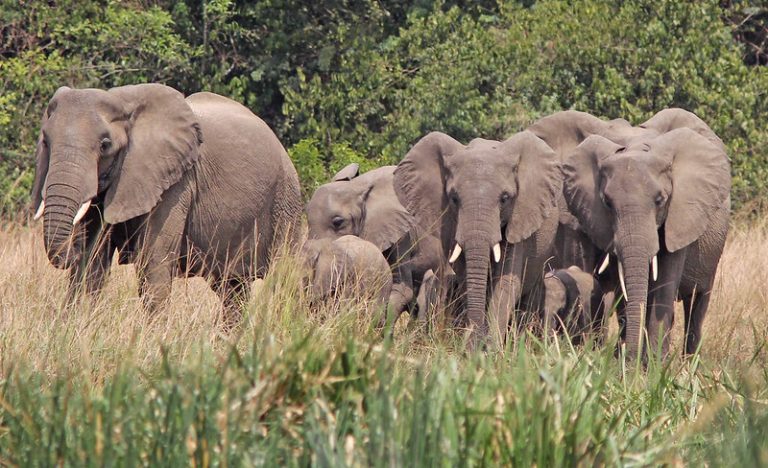
The Chemical Makeup of Elephant Ivory
To truly dominate the search intent for what are elephant tusks made of, we must analyze the chemical blueprint of ivory.
Ivory is an organic-inorganic matrix. It perfectly balances rigidity (to dig for water or strip tree bark) with flexibility (to survive high-impact clashes between dominant bulls).
| Component | Scientific Profile & Ecological Function |
|---|---|
|
Hydroxylapatite Inorganic Mineral ~65% to 70% |
Calcium phosphate crystal matrix that provides structural hardness and density, allowing the tusk to withstand high mechanical forces. |
|
Collagen Organic Protein ~30% to 35% |
A structural protein framework that provides elasticity, preventing brittle snapping when elephants exert immense leverage pressure. |
|
Water & Lipids Moisture Barrier ~2% to 5% |
Retains vital structural hydration throughout the dentine tubules, keeping the ivory sufficiently malleable to resist day-to-day friction and wear. |
The “Schreger Pattern”: The Fingerprint of Elephant Ivory
One of the most defining characteristics of true elephant ivory is an optical phenomenon known as Schreger lines.
When looking at a cross-section of a tusk, the microscopic dentinal tubules intersect to form a distinct, cross-hatched pattern of concentric angles. In African and Asian elephants, these lines intersect at angles greater than 115 degrees. This unique structural diamond pattern is absent in bone, plastics, or fake ivory alternatives, allowing wildlife forensic experts to immediately identify authentic elephant tusks.
Ivory vs. Bone: What Is the Difference?
A common misconception among safari travelers is confusing elephant tusks with skeletal bone. While both are hard, white, calcium-rich structures, they serve entirely different biological pathways:
- Bone is a vascularized, cellular system that constantly remodels itself. It contains bone marrow, specialized cells (osteocytes), and a much higher percentage of organic protein collagen, which makes it less dense than ivory.
- Ivory (Dentine) lacks a cellular structure once formed. It grows continuously from the inside out, accumulating daily rings similar to a tree. It contains far tighter structural mineral groupings than bone, which is why it can be carved smoothly without splintering or revealing internal skeletal pores.
Why Do Elephants Have Tusks? Their Vital Ecological Role
Elephants do not possess tusks merely for aesthetics; they are indispensable multi-tools. An elephant without its tusks is at a massive evolutionary disadvantage.
- Foraging and Stripping Bark: Elephants use their tusks to peel bark off trees to consume nutritious inner cambium layers, especially during dry seasons.
- Digging for Vital Resources: When water sources dry up on the African plains, elephants use their tusks as crowbars to dig deep into dry riverbeds to unearth hidden water tables and矿物 salts.
- Defense and Species Dominance: Bull elephants use their tusks to joust for mating rights and territory. Meanwhile, matriarchs utilize them to protect vulnerable calves from apex predators like lions and hyenas.
Because an elephant’s tusks are structurally fused to their skull and contain a highly sensitive internal pulp cavity, a tusk cannot be cleanly cut or harvested without causing catastrophic blood loss, systemic infection, and painful death to the animal. The global demand for this specific dentine composition has driven intense poaching crises across Africa.
The Frontline of Protection: Saving Uganda’s Elephants
Uganda has emerged as a spectacular success story for African elephant conservation. Following severe poaching eras in the 1970s and 1980s, strict protection frameworks by the Uganda Wildlife Authority (UWA) and community-based eco-tourism initiatives have allowed elephant populations to steadily rebound.
By booking an elephant conservation safari, you are directly funding anti-poaching patrols, community compensation funds (which alleviate human-wildlife conflict), and veterinary emergency teams.
Below is our masterfully crafted 7-Day Exclusive Elephant Conservation and Wildlife Safari managed by Active Uganda Safaris.
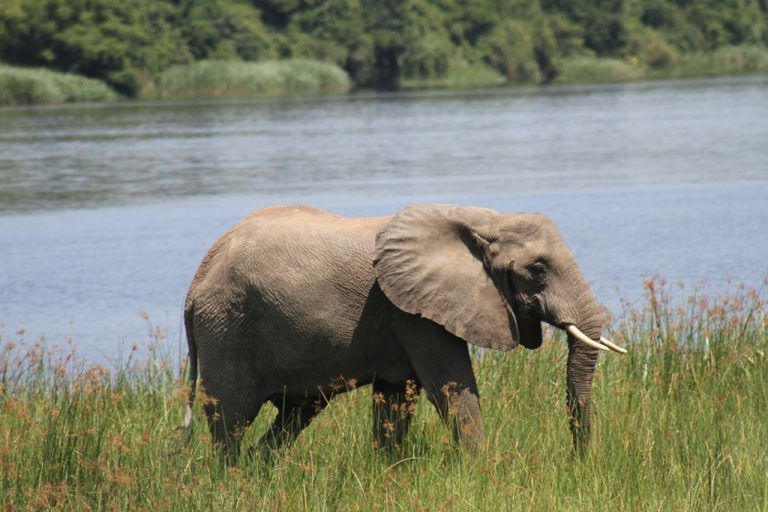
Tour Overview: 7-Day Elephant Conservation & Wildlife Safari
Experience a transformative journey into the heart of Uganda’s premier wildlife sanctuaries. This safari takes you into the sprawling ecosystems of Murchison Falls National Park and Queen Elizabeth National Park, blending classic big-game tracking with impactful conservation insights and iconic wilderness boat cruises.
Quick Itinerary Reference
- Day 1: Arrival in Entebbe, Conservation Briefing & Transfer to Kampala
- Day 2: Journey to Murchison Falls via Ziwa Rhino & Wildlife Ranch
- Day 3: Morning Savannah Flight Game Drive & Nile Delta Boat Cruise
- Day 4: Transfer to the Western Rift Valley (Queen Elizabeth Eco-system)
- Day 5: Kasenyi Plains Tracking & Kazinga Channel Heritage Boat Cruise
- Day 6: Ishasha Sector Tree-Climbing Lions & Elephant Migration Paths
- Day 7: Return Journey to Entebbe & Departure
Detailed Day-by-Day Safari Experience
1.Day 1: Arrival in Entebbe & Conservation Briefing:Gateway to Uganda.
Touch down at Entebbe International Airport, nestled on the shores of Lake Victoria. Your expert guide from Active Uganda Safaris will welcome you warmly and transfer you to your hotel.
In the evening, enjoy a detailed safari orientation and an interactive conservation briefing. You will learn about the current status of the African Elephant (Loxodonta africana), the historic impacts of the global ivory trade, and how your presence directly funds habitat security initiatives.
2.Day 2: Travel to Murchison Falls via Ziwa Rhino Sanctuary:Tracking Giants On Foot.
Depart early, driving north through beautiful countryside landscapes toward Murchison Falls National Park. En route, stop at the Ziwa Rhino and Wildlife Ranch.
Here, enjoy an intimate walking safari to observe the critically endangered southern white rhinos. Like elephants, rhinos are heavily poached for their structural appendages (though rhino horn is made of keratin, the same material as human fingernails, unlike the dentine of elephant tusks). Continue on to Murchison Falls for an evening check-in at your luxury eco-lodge.
3.Day 3: Savannah Game Tracking & Mighty Nile Boat Cruise:The Heart of Murchison Falls.
Embark on an early morning game drive across the northern banks of the Nile. With the help of your expert spotter, seek out massive herds of savannah elephants, Rothschild giraffes, lions, leopards, and Jackson’s hartebeests.
In the afternoon, experience a spectacular boat cruise to the base of Murchison Falls. You will cruise past hundreds of hippos, massive Nile crocodiles, and watch elephant families congregate along the riverbank to drink, bathe, and play in the water. Watch closely as they use their tusks to clear away riverbank vegetation!
4.Day 4: Scenic Drive to Queen Elizabeth National Park:Albertine Rift Landscapes.
Bid farewell to Murchison Falls and drive south along the dramatic Albertine Rift Escarpment. Enjoy sweeping views of Lake Albert and passing agricultural communities.
Arrive at the periphery of Queen Elizabeth National Park in the late afternoon. This park is famous for its mosaic of open savannahs, crater lakes, and dense swamps, offering a highly protective sanctuary for Uganda’s thriving elephant population.
5.Day 5: Kasenyi Tracking & Kazinga Channel Boat Cruise:Unparalleled Aquatic Wildlife Viewing.
Set out onto the Kasenyi plains for a morning game drive focused on predator-prey dynamics, tracking lions as they stalk Uganda kobs. Your guide will highlight elephant feeding corridors and explain how researchers track their seasonal migration patterns.
In the afternoon, embark on your second premier water activity: a boat cruise along the iconic Kazinga Channel. This natural 32-kilometer channel connects Lake Edward and Lake George. It boasts one of the highest concentrations of hippos globally, alongside massive elephant bulls cooling off in the shallow waters just meters from your boat.
6.Day 6: Ishasha Sector Tree-Climbing Lions & Elephant Paths:The Wild Southern Wilderness.
Drive south to the legendary Ishasha Sector, an untamed region world-renowned for its unique tree-climbing lions. Look up into the branches of ancient fig trees to spot these magnificent predators lounging away the heat of the day.
Ishasha also acts as an international wildlife corridor, connecting Uganda’s protected spaces to Virunga National Park in the Democratic Republic of Congo. Learn how transboundary conservation efforts keep these paths safe for cross-border elephant migrations.
7.Day 7: Elephant Research Insights & Return to Entebbe:Completing the Circle.
Before starting your return journey, visit a local community conservation project supported by your safari booking. Learn about alternative beehive fencing initiatives, which use elephants’ natural fear of African honeybees to humanely deter them from destroying community crops without harm.
After this final, inspiring look into modern wildlife preservation, sit back and reflect during a comfortable drive back to Entebbe for your evening departure flight home.
Why Choose Active Uganda Safaris?
At Active Uganda Safaris, we believe that travel should be deeply meaningful, ethically conscious, and highly rewarding. We don’t just show you the wildlife of East Africa; we connect you deeply to the preservation of these ecosystems.
- Expert Local Naturalist Guides: Our guides possess decades of combined experience tracking big game and understanding elephant behavior, communication, and biology.
- Strict Fair-Eco Tourism Principles: A direct percentage of every tour booking goes straight to local communities bordering Queen Elizabeth and Murchison Falls National Parks to foster peaceful co-existence with wildlife.
- Tailor-Made Comfort: We pair rugged, raw wildlife encounters with beautifully appointed luxury and mid-range eco-lodges that leave minimal carbon footprints on the environment.
Book Your Lifelong Conservation Journey Today
Now that you know exactly what elephant tusks are made of and the immense environmental pressures these magnificent creatures face daily, it’s time to act. Don’t just read about them — stand in their presence, hear their deep rumbling vocalizations, and play an active role in keeping them protected.
Contact the booking team at Active Uganda Safaris today to customize your 7-Day Elephant Conservation and Wildlife Safari. Let’s make your African dream travel an anchor for global wildlife preservation.