
Why Do Elephants Have Trunks? Your Complete Wildlife Guide
When you picture the grand landscapes of East Africa, you instantly see the African elephant—and you might wonder, why do elephants have trunks?
Towering, intelligent, and deeply majestic, these gentle giants dominate the savannah with a long, flexible nose that captures our curiosity like nothing else.
Far from being just a long nose, an elephant’s trunk is arguably the most versatile and sophisticated appendage in the animal kingdom. For an elephant, a trunk is an absolute lifeline—functioning as a hand, a straw, a megaphone, and a tool for survival all wrapped into one.
If you have ever wondered exactly why do elephants have trunks, let’s dive into the fascinating evolutionary science, anatomy, and daily behaviors behind this remarkable natural marvel.
The Incredible Anatomy of an Elephant’s Trunk
To truly understand why do elephants have trunks, we first have to look at how they are built.
An elephant’s trunk contains zero bones and zero cartilage. Instead, it is made up entirely of a complex network of muscles, nerves, and fat.
- Muscle Power: A single trunk contains an estimated 150,000 individual muscle units. To put that into perspective, the entire human body only has around 650 muscles!
- The Power of Touch: At the very tip of the trunk, African elephants possess two sensitive, finger-like extensions (Asian elephants have one). These “fingers” are so precise they can pick up a single blade of grass or crack open a seed shell, yet the trunk as a whole is strong enough to rip massive branches right off a tree.
4 Essential Reasons Why Do Elephants Have Trunks
Evolution shaped the trunk over millions of years to solve very specific survival challenges. Here are the core reasons why do elephants have trunks:
1. Feeding and Hydration
Elephants are mega-herbivores, meaning they need to consume up to 150 kilograms (330 pounds) of food and drink over 100 liters of water every single day. Because their massive heads and short necks make it impossible to lower their mouths directly to the ground or reach high into the trees, the trunk acts as a vital extension tool.
They use it to pluck high-up leaves, dig for roots, and tear down branches. When drinking, an elephant doesn’t use its trunk like a straw to drink through it; instead, it sucks water up into the lower half of the trunk (holding up to 8 liters at a time) and then squirts it directly into its mouth.
2. Breathing and an Advanced Sense of Smell
At its core, the trunk is an elongated nose. Because of its length, an elephant can breathe while swimming in deep water, using the trunk as a built-in snorkel.
Furthermore, an elephant’s sense of smell is legendary—up to five times more powerful than a bloodhound’s. They routinely raise their trunks into the air like a periscope, sniffing the wind to detect water sources, predators, or family members from several kilometers away.
3. Communication and Social Bonding
Elephants are deeply emotional, social animals, and the trunk plays a massive role in how they interact.
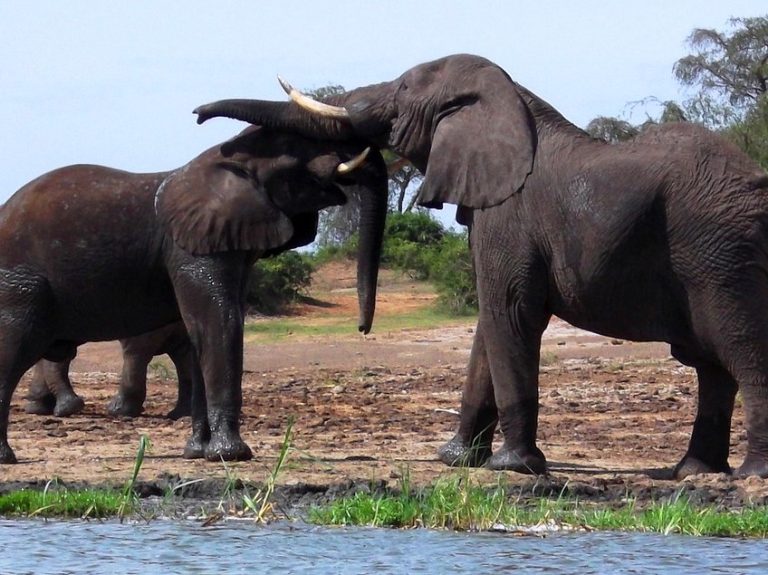
- Tactile Comfort: Mothers use their trunks to stroke and comfort their calves, while members of the same herd will intertwine their trunks as a sign of greeting or reassurance.
- Acoustic Amplification: When an elephant trumpets in excitement or warning, it uses the trunk as a powerful acoustic chamber to amplify the sound across the plains.
4. Snorkeling, Bathing, and Protection
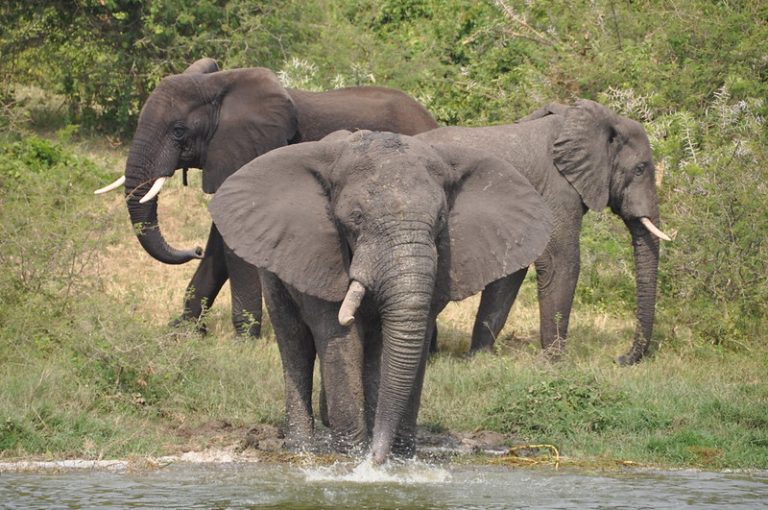
Life on the savannah is hot, and elephants use their trunks as personal shower heads. They draw up water or mud and spray it over their bodies to cool down and create a protective layer against the harsh equatorial sun and biting insects.
See Africa’s Giants in the Wild: Book Your Next Adventure
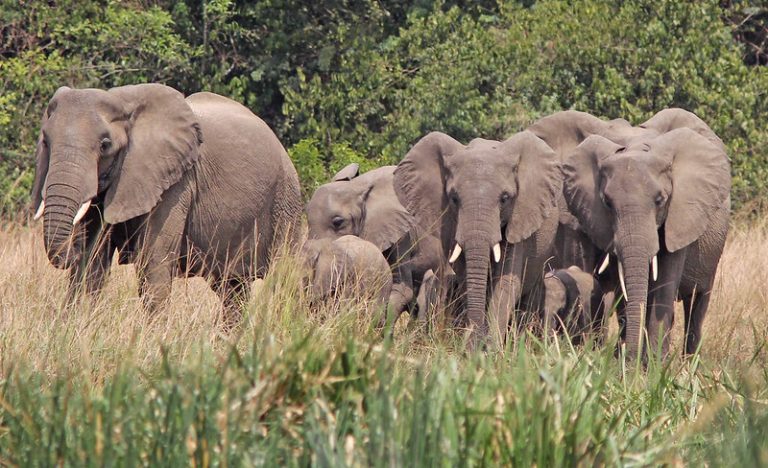
Now that you know exactly why do elephants have trunks, it’s time to see these magnificent appendages in action. Watching an elephant use its trunk to bathe in a river or pick acacia leaves in real life is a perspective-shifting experience.
At Active Uganda Safaris, we specialize in bringing you face-to-face with the wild. Below is an exclusive, cross-border itinerary designed to show you Africa’s most iconic wildlife—including the massive elephants of Uganda—starting directly from Kigali.
The 4-Day Queen Elizabeth Elephant & Bwindi Gorilla Epic Safari
This is the trip of a lifetime. Starting smoothly from Kigali, Rwanda, this high-yield safari bypasses long driving times and takes you straight into Uganda’s two premier national parks. Prepare to see the massive elephants of Queen Elizabeth National Park roaming the savannah, followed by an intimate encounter with the mountain gorillas of Bwindi. This is the moment you have been waiting for!
🇷🇼 Kigali Arrival ➔ Queen Elizabeth NP (Massive Elephants & Kazinga Channel) ➔ Bwindi NP (Gorilla Trek) ➔ 🇷🇼 Kigali Departure
Day 1: Kigali to Queen Elizabeth National Park – Welcome to Elephant Country
Your adventure begins with an early morning pickup by your Active Uganda Safaris guide in Kigali. You will drive north, enjoying scenic views of Rwanda’s rolling terraced hills before crossing the border into Uganda.
As you descend into the East African Rift Valley, you will enter Queen Elizabeth National Park. Arrive in time for an afternoon game drive across the Kasenyi plains. Keep your eyes peeled as we track the park’s legendary, massive herds of African savannah elephants moving through the acacia thickets, alongside herds of Cape buffaloes, kobs, and elegant waterbucks. Overnight at your selected safari lodge.
Day 2: Massive Elephants of the Kazinga Channel & Transfer to Bwindi
Rise early for a morning game drive to watch predators like lions and leopards winding down their night hunts. After a hearty lunch, you will embark on the highlights of the park: a 2-hour boat safari on the famous Kazinga Channel.
This natural channel connecting Lake Edward and Lake George features the highest concentration of hippos in Africa. Most importantly, it is where you will see massive elephants at Queen Elizabeth lining the riverbanks to drink, play, and wash. Watching a giant bull elephant submerge itself and use its trunk as a snorkel right next to your boat is a breathtaking experience. Following the boat cruise, we will drive south toward the misty, ancient forest canopy of Bwindi Impenetrable National Park for dinner and overnight rest.
Day 3: The Bucket-List Mountain Gorilla Trekking Experience
This is the day that will stay with you forever. After an early breakfast, head to the park headquarters for a briefing from Uganda Wildlife Authority (UWA) rangers.
Led by expert trackers, you will step into the dense, emerald slopes of Bwindi Impenetrable National Park in search of a habituated mountain gorilla family. The trek through the misty forest can take anywhere from 2 to 6 hours, but the moment you step through the foliage and lock eyes with a magnificent Silverback gorilla, time stands still. You will spend one unforgettable hour observing them groom, play, and feed just meters away from you. Return to the lodge for a celebratory evening and a well-deserved rest.
Day 4: Cultural Morning and Scenic Transfer Back to Kigali
After breakfast, enjoy a peaceful morning walk or a brief cultural interaction with the local community to learn about traditional forest life. Afterward, load your bags back into your custom 4×4 safari cruiser as we begin our scenic return drive across the border. Your guide will drop you off at your hotel in Kigali or directly at Kigali International Airport for your evening departure flight home.
Start Planning the Trip of Your Life Today!
Whether you want to witness why do elephants have trunks on the shores of the Kazinga Channel or look directly into the eyes of a mountain gorilla in Bwindi, this 4-day safari is crafted to deliver pure magic.
Ready to book the adventure of a lifetime? Contact Active Uganda Safaris today to lock in your gorilla trekking permits, check seasonal rates, and customize your dream itinerary!