
Where Do Shoebills Live? (+ Complete 7-Day Uganda Birding Itinerary)
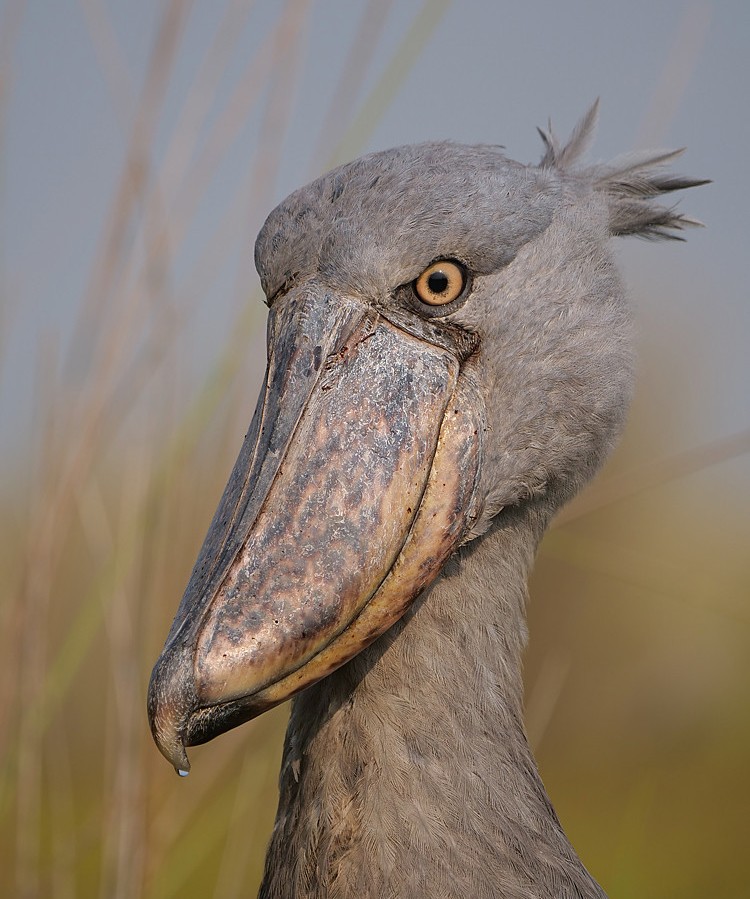
The Shoebill Stork (Balaeniceps rex) is arguably one of the most mesmerizing, prehistoric-looking creatures on the planet. Standing nearly five feet tall with an unblinking, predatory stare and a massive, clog-shaped beak capable of decapitating lungfish, it tops the bucket list of every serious birder and wildlife enthusiast.
Beyond Kigali Tours+ 2
But for travelers planning a dream avian safari, the big question remains: where do shoebills live, and how can you experience a face-to-face encounter with this elusive “King of the Marshes”?
This comprehensive guide breaks down the exact geographic habitats of the Balaeniceps rex, analyzes the specialized ecosystems they require to survive, and delivers an expert, field-tested 7-day birding safari to Uganda designed to give you the highest probability of spotting this magnificent bird in the wild.
Part 1: Where Do Shoebills Live? The Global Habitat Breakdown
To answer where do shoebills live geographically, we must look at the tropical wetlands of East and Central Africa. The global population of wild shoebills is critically low, estimated at between 5,000 and 8,000 individuals, making their distribution highly localized.
The primary shoebill stork locations span a handful of sub-Saharan countries, concentrated heavily within the Nile basin and its connecting drainage systems.
1. Uganda: The Premier Destination
When tracking down where does the shoebill live with the highest accessibility and sighting success, Uganda is the undisputed world leader. The country features tightly managed, community-protected Ramsar sites that allow birders to navigate narrow papyrus channels by boat, getting within remarkable viewing distance of the birds.
GoExplore Safaris
2. South Sudan: The Sudd Stronghold
Biologically, the vast Sudd Swamps of South Sudan host the largest single concentration of shoebill storks globally. However, due to prolonged geopolitical instability, lack of tourism infrastructure, and extreme logistical difficulties, it remains virtually inaccessible to the average traveler.
3. Other Regional Footprints
Beyond Uganda and South Sudan, isolated populations of shoebill birds live in:
- Zambia: Specifically the Bangweulu Wetlands, where they wade through seasonal floodplains.
- The Democratic Republic of Congo (DRC): Along remote river systems in the eastern regions.
- Tanzania: Scattered throughout the marshlands bordering Lake Victoria and Malagarasi wetlands.
- Rwanda: Occasional vagrant sightings in the papyrus fringes of Akagera National
| Country | Sighting Reliability / Accessibility |
|---|---|
| Uganda | Exceptional / World-Class Infrastructure |
| South Sudan (The Sudd) | High Population / Extremely Low Safety |
| Zambia (Bangweulu) | Moderate / Seasonal Success |
| Tanzania & DRC | Low / Remote & Hard to Access |
Part 2: The Anatomy of a Shoebill Habitat
Understanding where do shoebills live in the wild requires looking closely at their highly specialized ecological demands. These birds are not generalist waders; they are extreme habitat specialists.
Papyrus and Reedbeds (Cyperus papyrus)
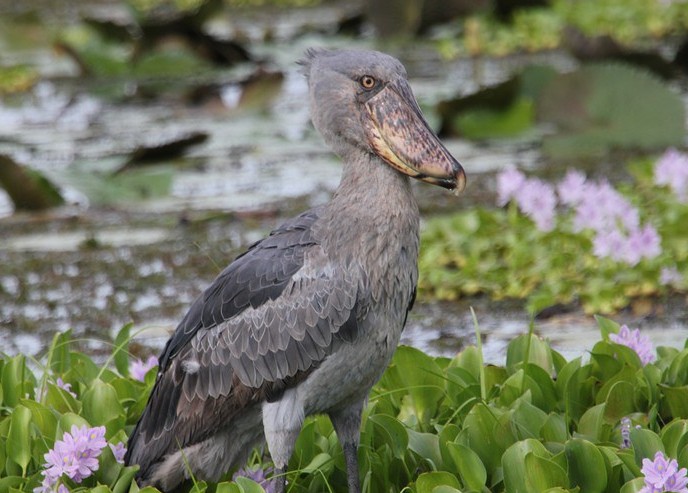
The definitive answer to what habitat do shoebills live in is undisturbed, extensive freshwater marshes dominated by papyrus, Phragmites reeds, and Typha cattails. They intentionally avoid completely dense, impenetrable forest walls, preferring a matrix of mixed vegetation interspersed with clear, open water channels.
Poorly Oxygenated, Shallow Waters
Shoebills have evolved a brilliant hunting strategy tied to water chemistry. They live in swamps with low oxygen levels. Why? Because poorly oxygenated water forces their primary prey—the African lungfish—to surface frequently for atmospheric air. The shoebill will stand entirely motionless for hours, resembling a gray statue, waiting for a lungfish or senegal bichir to break the surface before executing a violent, downward “collapse” strike.
Floating Vegetation Carpets
Weighing up to 12 pounds, these giant birds require stability. They thrive on large masses of floating vegetation or compressed peat platforms. Their extraordinarily long toes distribute their weight perfectly, allowing them to walk across floating water lilies and grass mats like giant jacanas without sinking into the deep mud.
Part 3: Where to See Shoebills in Uganda
If you are planning an expedition to find where shoebill storks live in easily accessible environments, Uganda offers three iconic, highly reliable hot spots.
1. Mabamba Bay Wetland (Entebbe/Kampala)
Situated on the edge of Lake Victoria just a short drive or boat ride from Entebbe, Mabamba Swamp is universally recognized as the top location to see shoebills. Spanning over 2,400 hectares, this Ramsar site features a thriving local community guiding network. Paddling quietly in a traditional wooden canoe at sunrise provides a near-guaranteed look at the birds hunting in the morning mist.
2. The Albert Delta (Murchison Falls National Park)
Where the Victoria Nile flows into Lake Albert, it forms a classic, sweeping delta. Taking a downstream boat safari here reveals prime wetland real estate where shoebill storks stand on the low banks alongside papyrus gonoleks, goliath herons, and giant Nile crocodiles.
3. Lugogo Swamp (Ziwa Rhino Sanctuary)
Located midway between Kampala and Murchison Falls, the Lugogo Swamp within Ziwa provides a highly secure sanctuary environment. Guided canoe treks through this marsh frequently reveal nesting pairs of shoebills, offering an excellent detour on a broader northern safari circuit.
Part 4: The Ultimate 7-Day Birding Safari to Uganda
To truly experience where do shoebills live alongside Uganda’s broader, spectacular avian wealth, this specialized 7-day itinerary optimizes your route for maximum target-species exposure, professional guiding, and clear, comfortable accommodation tiers.
Day 1: Arrival in Entebbe & Botanical Garden Birding
Your journey begins with an arrival at Entebbe International Airport on the shores of Lake Victoria. After settling in, spend your afternoon acclimating with an easy stroll through the historic Entebbe Botanical Gardens. This lakeside sanctuary offers an incredible introduction to East African birding.
- Target Avian Species: Great Blue Turaco, Ross’s Turaco, Black-and-white-casqued Hornbill, African Grey Parrot, Double-toothed Barbet, and Golden-backed Weaver.
- Accommodation Tiers:
- Luxury: No.5 Boutique Hotel / Hotel No.5
- Mid-Range: Karibu Guest House
- Budget: ViaVia Guesthouse Entebbe
Day 2: The Shoebill Quest at Mabamba Swamp
Wake up early for a 6:00 AM departure to Mabamba Bay Wetland, the ultimate answer to where do shoebill storks live in high concentrations. You will board a motorized canoe to navigate the narrow papyrus corridors. The early morning hours offer the highest activity level as the birds hunt before the heat of the day sets in. Afternoon transfer heading north toward the central plains.
- Target Avian Species: The Shoebill (Balaeniceps rex), Lesser Jacana, Malachite Kingfisher, Pied Kingfisher, Swamp Flycatcher, Papyrus Gonolek, and Blue-breasted Bee-eater.
- Accommodation Tiers (Luweero/Ziwa Area):
- Luxury / Premium Mid-Range: Amuka Rhino Lodge (Located inside Ziwa Sanctuary)
- Budget: Ziwa Rhino Sanctuary Guesthouse
Day 3: Ziwa Rhino Tracking & Swamp Birding to Murchison Falls
Spend the morning tracking wild Southern White Rhinos on foot through the savannah woodlands of Ziwa. Following the trek, explore the fringes of the Lugogo Swamp for any missed marsh specialists before embarking on a scenic drive north into Murchison Falls National Park, stopping to admire the thunderous explosion of the Nile compressing through a 7-meter gorge.
- Target Avian Species: Abyssinian Ground Hornbill, Crested Francolin, Meyer’s Parrot, Silverbird, and White-crested Turaco.
- Accommodation Tiers:
- Luxury: Baker’s Lodge / Nile Safari Lodge
- Mid-Range: Murchison River Lodge (Safari Tents) / Pakuba Safari Lodge
- Budget: Red Chilli Rest Camp
Day 4: Savannah Morning Game Drive & Nile Delta Boat Cruise
An absolute highlight of the itinerary. The morning is spent exploring the northern tracks of the park, where rolling savannahs host big game and vibrant raptor populations. In the afternoon, board a private boat launch navigating downstream toward the Albert Delta, an essential wetland defining where do shoebill storks live in the wild.
- Target Avian Species: Shoebill, Saddle-billed Stork, Goliath Heron, African Fish Eagle, Martial Eagle, Secretary Bird, and Red-throated Bee-eater.
- Accommodation Tiers:
- Luxury: Baker’s Lodge / Nile Safari Lodge
- Mid-Range: Murchison River Lodge / Pakuba Safari Lodge
- Budget: Red Chilli Rest Camp
Day 5: Forest Birding in Budongo (The Royal Mile)
Depart the northern savannahs and head south to the lush, tropical canopy of the Budongo Forest Reserve. You will spend the day birding along The Royal Mile, a widely celebrated, flat forestry track universally regarded as one of the single best forest birding locations anywhere in Africa.
- Target Avian Species: Chocolate-backed Kingfisher, African Dwarf Kingfisher, Blue-breasted Kingfisher, Sabine’s Spinetail, Ituri Batis, and Chestnut-capped Flycatcher.
- Accommodation Tiers:
- Luxury / Premium Mid-Range: Kabalega Wilderness Lodge
- Mid-Range / Budget: Budongo Eco Lodge
Day 6: Budongo Chimp Tracking & Transfer Back to Entebbe
Before concluding your avian expedition, enjoy a thrilling morning tracking wild chimpanzees through the mahogany forests of Budongo. Listen to their pant-hoots echoing through the ancient canopy. After emerging from the forest, begin a relaxed drive back south toward Entebbe, capturing final lookouts over the changing Ugandan countryside.
- Target Avian Species: Cassin’s Hawk-Eagle, Nahan’s Partridge, Yellow-crested Woodpecker, and Forest Robin.
- Accommodation Tiers:
- Luxury: No.5 Boutique Hotel
- Mid-Range: Karibu Guest House
- Budget: ViaVia Guesthouse Entebbe
Day 7: Departure & Last-Minute Sightings
Depending on your international flight itinerary, enjoy a relaxed morning overlooking Lake Victoria or pick up final coastal sightings along the Entebbe peninsula before transferring directly to the airport for your journey home.
Part 5: Essential Gear for Your Shoebill Expedition
When venturing directly into the wet marshes and swamp complexes where shoebill birds live, coming prepared with correct field gear ensures your comfort and maximizes your photographic success.
- High-Quality Optics (8×42 or 10×42 Binoculars): Because shoebills often stand perfectly still deep in the reeds, scanning far across the marsh line requires bright, crisp lenses.
- Telephoto Lenses (Minimum 400mm–600mm): Ethical tour guides maintain a strict, respectful distance from these vulnerable birds to prevent disrupting their hunting cycles. A strong zoom lens is vital for sharp plumage details.
- Waterproof Boots or Trail Shoes: Getting in and out of wooden canoes at muddy launch sites like Mabamba requires durable, water-resistant footwear.
- Neutral-Colored Clothing: Avoid bright whites or fluorescent tones. Stick to earthy greens, khakis, and tans to blend organically into the surrounding papyrus reeds.
Final Verdict: Planning Your Pilgrimage
Now that you know exactly where do shoebills live and how they interact with their environments, the choice comes down to picking the right season. While shoebills can be found year-round in Uganda, planning your birding safari during the dry months (December to February and June to September) ensures lower water levels, causing the fish to concentrate and making these majestic, prehistoric kings far easier to track down.
Ready to Face the Prehistoric Shoebill - King of the Swamps?
Don't leave your dream birding trip to chance. Spaces for expert-guided marsh boat treks are highly limited due to strict community conservation guidelines. Let our specialist local guides handle your custom 7-day Uganda birding itinerary, permits, and private transport seamlessly.