
John The Elephant: The Legendary Giant of Queen Elizabeth National Park
John the Elephant is a colossal, magnificent bull elephant who has become a living legend in Uganda among rangers, researchers, and safari enthusiasts. While most African safari travelers expect to observe general wildlife and nature’s raw patterns, this single, iconic animal stands out from anonymity as a unique and celebrated attraction.
If you are planning an expedition to the pearl of Africa, understanding the story of John the Elephant transforms a standard game drive into a historic quest. He isn’t just another member of the herd; he is structurally celebrated as the most popular elephant in Uganda. Meeting him face-to-face on the savannah plains is the ultimate milestone for any wildlife enthusiast.
Who is John the Elephant?
John the Elephant is an extraordinary African bush elephant (Loxodonta africana) who has made the sweeping savannahs of Queen Elizabeth National Park his primary kingdom.
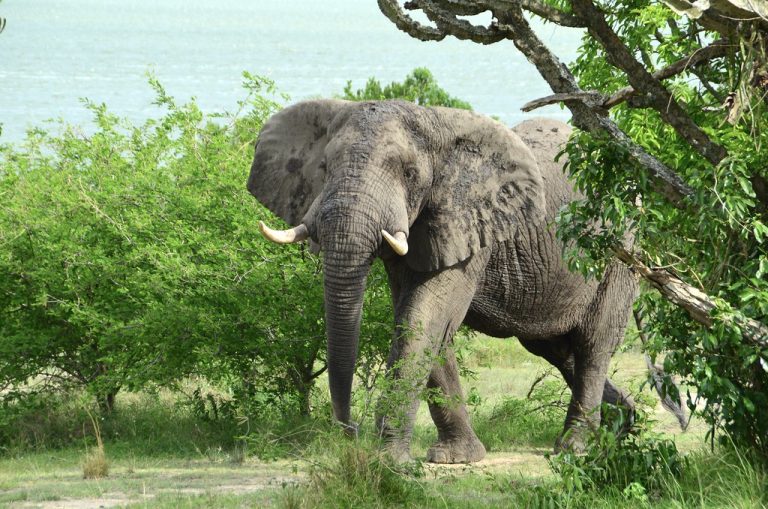
While the average adult male bull elephant is already an imposing figure, John stands out as an absolute titan. Estimated by conservationists to be in his prime, his sheer physical scale is mesmerizing. He possesses a remarkably towering shoulder height and a deep, heavily wrinkled, battle-scarred hide that tells the story of decades navigating the wild Ugandan bush.
But it isn’t just his immense size that has earned him the title of the most popular elephant in Uganda. What makes John the Elephant a true safari icon is his distinct, calm, and majestic personality.
Unlike younger bulls who can be erratic, John moves with a slow, deliberate confidence. He is highly habituated to the presence of respectful safari vehicles, often allowing travelers to experience close, breathtakingly intimate encounters as he walks peacefully alongside the park’s tracking paths.
The Signature Traits of Uganda’s Most Popular Elephant
Tracking John Elephant across the Kasenyi plains or near the volcanic crater lakes requires a keen eye. Field guides and rangers at Queen Elizabeth National Park identify this legendary bull using several distinct physical markers:
- The Massive Tusks: John carries an exceptionally heavy, symmetrical set of ivory tusks that curve forward elegantly. In an era where large tuskers are increasingly rare across the continent due to historical poaching, John stands as a proud testament to Uganda’s successful conservation laws.
- Distinct Ear Patches: Like a human fingerprint, an elephant’s ears are completely unique. John can be identified by specific small notches along the lower edges of his massive, map-of-Africa shaped ears—badges of honor earned during historic sparring matches with rival bulls.
- Raw Structural Presence: When John steps out from the acacia thickets onto the open grasslands, the atmosphere shifts. His footprint depth and the massive shadow he casts make him instantly recognizable even from a distance.
Where to Find John Elephant in Queen Elizabeth National Park
Because he is a wild, free-roaming giant, John does not stay in one fixed spot. However, his migratory patterns are well known to the experienced tracking teams at Active Uganda Safaris.
If you are looking to cross paths with John the Elephant, our custom itineraries focus heavily on his favorite hotspots within the park:
- The Kasenyi Plains
This vast, open savannah is a prime grazing ground. John is frequently spotted here during the early mornings, moving gracefully through the golden grasses, feeding on low shrubs, and occasionally interacting with the large residential herds of Cape buffalo.
- The Kazinga Channel Waterway
During the intense heat of the afternoon, John often makes his way down to the banks of the 32-kilometer Kazinga Channel to drink and cool off. Seeing this legendary bull elephant wading deep into the water while pods of hippos grunt nearby is a world-class visual experience that standard game drives simply cannot match.
Experience a Legend: Book Your Safari to See John the Elephant
Reading about a giant is one thing, but standing in the presence of John the Elephant is an experience that stays with you forever. The gentle sound of his deep breathing, the incredible precision of his trunk as he strips bark from a branch, and the sheer authority of his movement will redefine how you view the natural world.
At Active Uganda Safaris, we specialize in expert-led tracking expeditions through Queen Elizabeth National Park. Our professional guides share a deep connection with the park rangers, giving you the absolute best mathematical chance of locating John the Elephant during his daily patrols.
Our custom-outfitted 4×4 safari vehicles feature open roofs for unobstructed, safe, and professional photography, ensuring you capture the raw majesty of the most popular elephant in Uganda in high definition.
Let Active Uganda Safaris build for you a custom quote for you to go and see John the Elephant at Queen Elizabeth Nation park.
4-Day Queen Elizabeth National Park "Tracking Legend John" Safari
This specialized itinerary focuses heavily on the unique community coexistence and migratory patterns of John the Elephant. By tracking the specific zones where this massive bull feeds and rests, travelers get an immersive, story-driven wildlife experience alongside standard big-game viewing.
Itinerary Overview
- Day 1: Kampala/Entebbe to Queen Elizabeth National Park & Katunguru Community Introduction
- Day 2: Kasenyi Plains Sunrise Game Drive & Kazinga Channel Boat Cruise
- Day 3: Equator Sector Bull Tracking & Engiri Walking Buffer Patrol
- Day 4: Crater Lakes Scenic Exploration & Return Transit to Kampala
Because John the Elephant is incredibly well-habituated to humans, he often allows vehicles to sit quietly within respectful distances while he feeds. Your guide will keep the engine off to allow you to capture the sound of his deep rumbling and breathing completely undisturbed.
Day 1: Scenic Drive to the Great Rift Valley & Katunguru Community Introduction
Your journey begins at sunrise with a private 4×4 pickup from your residence or hotel in Kampala or Entebbe. Drive west across the equator line at Kayabwe, stopping for a quick photography break and an informative coffee stop. Continue through the lush agricultural landscapes of Ankole, descending down the dramatic Kichwamba Escarpment into the floor of the Albertine Rift Valley.
Arrive and check into your safari lodge. In the late afternoon, your guide will take you down toward the Katunguru village community corridor. Unlike ordinary park herds that stay deep in the bush, John is famous for his peaceful, calm demeanor right near the borders of this fishing community. We will explore the boundary tracks where he is known to transition between the open park thickets and the local woodlands.
- Overnight: Engiri Game Lodge or similar eco-property near Katunguru
- Meals: Lunch, Dinner
Day 2: Kasenyi Plains Sunrise Safari & Kazinga Channel Boat Cruise
Set your alarm early for a sunrise game drive along the Kasenyi tracks. This open savannah ecosystem supports massive herds of Uganda kobs, which in turn attract prides of lions and leopards. As we navigate the tracks, we keep our eyes peeled for massive solo bulls patrolling the plains—a classic habitat space where John travels when he searches for seasonal vegetation.
In the afternoon, experience the park’s premier water safari: a boat cruise down the Kazinga Channel. This 32-kilometer waterway connects Lake Edward and Lake George and boasts one of the highest concentrations of hippopotamuses and Nile crocodiles on earth. Keep your long lenses ready—John frequently visits the channel banks in the hot afternoon hours to bathe, drink, and spray mud over his massive hide.
- Overnight: Premium Safari Lodge near the channel
- Meals: Breakfast, Lunch, Dinner
Day 3: Equator Sector Tracking & Engiri Woodland Buffer Walk
Today is dedicated entirely to tracking the localized home ranges of John. After an early breakfast, explore the scrublands and acacia zones surrounding the northern equator tracks. Your guide will work in close coordination with local community scouts and park rangers to track fresh footprints, broken branches, and fresh dung to pinpoint exactly where this iconic giant is moving.
In the afternoon, enjoy a guided walking safari along the safe, community-managed nature buffers bordering Katunguru and Engiri camp. This interactive walk gives you a first-hand look at how the local community has successfully chosen coexistence over conflict, learning to share their historic landscape with a 4-ton wild elephant neighbor. You will also have excellent opportunities to spot olive baboons, warthogs, and a colorful array of savanna bird species.
- Overnight: Premium Safari Lodge near the channel
- Meals: Breakfast, Lunch, Dinner
Day 4: Volcanic Crater Lakes Exploration & Return Journey
Conclude your safari with a scenic morning drive along the breathtaking Katwe Explosion Craters route. This dramatic landscape features a cluster of ancient volcanic craters and extinct cones, offering panoramic views of the Rwenzori Mountains and the expansive rift valley floor below. It serves as a vital historical migratory route for elephant families traveling through the park.
Following this scenic morning drive, enjoy a fresh lunch at the lodge before checking out. Embark on your private 4×4 return transit back across the western hills, arriving in Kampala or Entebbe by late evening to connect with your outbound travel plans.
- Meals: Breakfast, Lunch
Frequently Asked Questions About John the Elephant
- Is it safe to get close to John the Elephant on a safari? Yes, under the guidance of a professional safari operator. John the Elephant is highly habituated to vehicles and exhibits an incredibly peaceful demeanor. However, he is still a powerful, wild apex mammal. Our guides are trained to read his behavioral cues, maintain strict safety boundaries, and ensure the encounter is completely respectful, stress-free, and safe for both you and John.
- What does John Elephant eat to maintain his massive size? Like all African bush elephants, John is a pure mega-herbivore. He spends up to 18 hours a day feeding, consuming roughly 300 to 400 pounds of vegetation. His diet consists of a wide variety of savanna grasses, acacia leaves, roots, and juicy bark, which he effortlessly peels away using his powerful tusks.