
What is the Bite Force of a Lion? The Jaw-Dropping Reality of the King
When you hear a wild lion roar across the African savannah at 5:00 AM, the sound doesn’t just vibrate in your ears—it rattles your chest cavity. It is the ultimate acoustic reminder that you are standing in the domain of an apex predator.
But while the roar commands respect, it’s the business end of the cat that does the heavy lifting. If you are preparing for an authentic African savanna safari, or simply trying to settle a debate, one question inevitably comes up: what is the bite force of a lion?
How powerful is the clamp of those jaws, and how does it compare to other beasts of the wild? Let’s take a deep dive into the mechanical power of the king, and uncover a sobering truth about their survival in the wild heart of Uganda.
The Raw Numbers: What is the Bite Force of a Lion?
A lion’s bite force registers at approximately 650 to 1,000 PSI (Pounds per Square Inch).
To put that into perspective, the average adult human bites down with a modest force of about 160 PSI. This means a lion’s jaw packs four to six times the crushing pressure of a human’s. It is a force specifically engineered by evolution to crack through thick hides, snap bones, and anchor massive, struggling prey like Cape buffaloes and zebras.
Big Cat Showdown: Predator Bite Force Comparison
Surprisingly, despite holding the crown of the “King of the Jungle,” lions do not actually possess the strongest bite in the animal kingdom, nor even among the big cats.
| Animal | Bite Force (PSI) & Predatory Strategy |
|---|---|
| Nile Crocodile | 3,000 – 5,000 PSI Strategy: Brute bone-crushing, drowning |
| Hippopotamus | 1,800 PSI Strategy: Pure defensive structural crushing |
| Jaguar | 1,500 PSI Strategy: Piercing skulls and turtle shells |
| Spotted Hyena | 1,100 PSI Strategy: Grinding down dense marrow bones |
| Bengal Tiger | 1,050 PSI Strategy: Solitary, high-impact ambush |
| African Lion | 650 – 1,000 PSI Strategy: Precision suffocation & teamwork |
| Adult Human | 160 PSI Strategy: Chewing cooked meals |
Anatomy of a Lethal Clamping Machine
Why don’t lions bite as hard as jaguars or hyenas? Because they don’t have to.
A hyena needs 1,100 PSI because its evolutionary niche involves grinding down dry, dense bones left behind by other hunters. A jaguar requires ,500 PSI to puncture thick turtle shells and pierce the skulls of caimans.
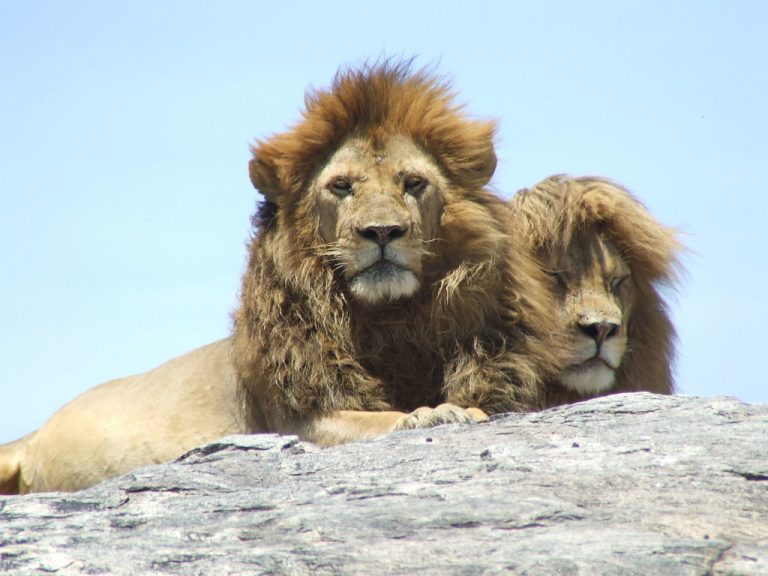
Lions, on the other hand, are cooperative social hunters. Their hunting strategy relies on a specialized physical layout designed for a precise, vice-like hold rather than instant bone pulverization.
A 60-Second Reality Check (No Offense to the Gym Goers)
Every now and then, a human walks around with the illusion that a fit, trained man could somehow survive a wrestling match with a wild cat. Let’s inject a little biological humor into that daydream:
If an average human male were to step into the ring with an adult lion, it wouldn’t be a dramatic, back-and-forth Hollywood action sequence. It would be a catastrophic 45-second mistake. Long before a human could even register the sheer weight of the animal pinning them to the dirt, those massive jaw muscles would flex. In less than a minute, the lion, using its dagger-like, four-inch canine teeth, would have casually unzipped and torn off the man’s face like a damp paper towel.
The mechanics of their skulls allow their entire head to function as a unified clamp. When a lion bites the throat of a 900-kilogram buffalo, it doesn’t try to chew; it locks its jaws into a suffocating hold and simply waits for physics to finish the job.
The Heartbreaking Reality: Uganda’s Kings Are Fading Away
The raw power of a lion’s jaw can bring down a massive buffalo, but it is entirely defenseless against human encroachment, wire snares, and retaliatory poisonings.
The sad, urgent truth is that lions are dying out in Uganda.
According to recent national wildlife censuses, Uganda’s entire wild lion population has plummeted to fewer than 300 individuals across the entire country. This apex predator is fighting a losing battle against habitat fragmentation and human-wildlife conflict along park borders. If things don’t change, the iconic roar of the African lion could vanish from Uganda within our lifetime.
But there is a silver lining. Tourism is the single most effective shield protecting these magnificent cats.
Where to See the Remaining Kings: .Queen Elizabeth & Kidepo Valley
If you want to witness these majestic creatures in their natural, untamed elements—and actively participate in keeping them alive—you need to look toward Uganda’s primary savannah sanctuaries.
1. Queen Elizabeth National Park: The Tree-Climbing Wonders
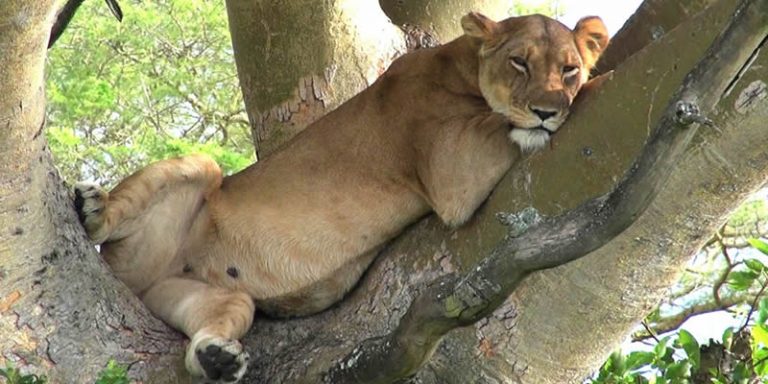
Straddling the equator, Queen Elizabeth National Park is home to an incredibly unique population of lions: the famous tree-climbing lions of the Ishasha sector.
Watching a 400-pound predator lazily lounge on the limbs of an ancient fig tree, scanning the open plains for Uganda Kob, is a sight you will never forget. However, this specific population is hanging on by a thread, with fewer than 50 individuals left in the entire park ecosystem due to intense regional pressures.
2. Kidepo Valley National Park: The Isolated Wilderness
Tucked into the rugged, mountainous terrain of Uganda’s remote northeastern corner, Kidepo Valley offers an landscape that feels like Africa a century ago.
It is beautifully wild, but its lion population is critically low—with fewer than 15 to 20 individuals remaining in the entire valley. Because of their isolation, these prides face massive genetic vulnerabilities and need intense conservation monitoring to survive.
Turn Your Safari Into a Lifeline with Active Uganda Safaris
When you book a safari to visit these parks, you are not just checking an item off your travel bucket list; you are providing the exact financial lifelines these animals need to stay alive.
Under the Uganda Wildlife Authority (UWA) model, 20% of all park entrance fees go directly to the local communities surrounding the parks. When local farmers and pastoralists see real financial benefits from tourism revenue, they stop viewing lions as threats to their livestock and begin protecting them as priceless national assets. Furthermore, your safari directly funds anti-poaching ranger patrols that sweep the bush for deadly wire snares.