
How Long Do Crocodiles Live? Come Track These Giants in the Wild
For over 95 million years, crocodiles have reigned as the undisputed apex predators of Earth’s freshwater ecosystems. Surviving the asteroid impact that wiped out the dinosaurs, these armored reptiles have mastered the art of evolutionary endurance. Yet, when modern travelers and wildlife enthusiasts watch a prehistoric giant bask on a sun-drenched riverbank, one fundamental question always surfaces: how long do crocodiles live?
The answer to this question reveals a fascinating intersection of evolutionary biology, metabolic efficiency, and environmental resilience. While individual lifespans fluctuate drastically depending on the specific species, geographical pressures, and whether the reptile resides in the wild or captivity, large crocodilians are among the longest-living vertebrates on our planet.
This comprehensive guide dissects the intricate science behind crocodilian longevity, examines the species-specific lifespans of these ancient survivors, and maps out an exclusive 6-Day Murchison Crocodile Tracking & Wildlife Safari in Uganda—the premier destination on Earth to witness hyper-centenarian Nile crocodiles ruling the historic River Nile.
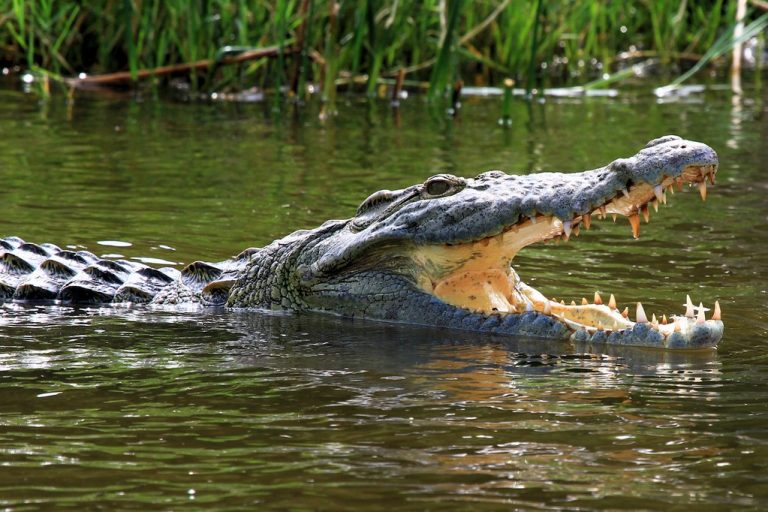
The Core Science: How Long Do Crocodiles Live?
To accurately address the question of how long do crocodiles live, we must look beyond mere calendar years and examine the unique physiological mechanisms that prevent these reptiles from aging the way mammals do.
On average, large crocodile species in the wild live between 60 to 70 years, while exceptional individuals comfortably cross the 100-year milestone.
1. Negligible Senescence: Cellular Agelessness
Unlike humans, dogs, or birds, crocodiles exhibit a biological phenomenon known as negligible senescence. This implies that they do not experience measurable functional decline or increased mortality as a direct result of chronological aging. A 70-year-old crocodile possesses virtually the same cellular vitality, metabolic efficiency, and hunting efficacy as a 25-year-old adult. They do not die of “old age” in the traditional sense; instead, their lifespan is eventually cut short by external factors such as starvation, territorial combat wounds, infectious diseases, or human encroachment.
2. Ectothermic Efficiency and Metabolic Bradiardia
As ectothermic (cold-blooded) organisms, crocodiles rely completely on external environmental heat sources—such as solar radiation—to regulate their core body temperature. Because they do not expend metabolic energy generating internal body heat, their baseline energy requirement is up to 90% lower than a mammal of equivalent body mass.
During periods of severe food scarcity, a mature crocodile can intentionally slow its heart rate down to a mere 2 to 3 beats per minute, entering a metabolic state that allows it to survive for more than a year on a single, substantial meal. This low-wear, low-tear metabolic blueprint significantly preserves cellular structure over decades, directly extending their lifespan.
3. An Impenetrable Immune System
Crocodiles frequently engage in violent, bone-crushing territorial battles that result in severed limbs, deep lacerations, and ripped flesh. Despite living in stagnant, muddy waters teeming with lethal pathogenic bacteria, these severe wounds rarely become septic.
Crocodilian blood contains highly specialized antimicrobial peptides known as crocodilin. Scientific laboratory analyses have demonstrated that these proteins are significantly more effective at neutralising virulent bacteria and viruses than human antibodies, allowing injured wild individuals to recover rapidly and survive deep into their senior years.
Crocodilian Lifespans Across Different Species
The structural scale of a crocodile species directly dictates its longevity potential. As a baseline ecological rule, the larger the species, the longer its projected lifespan. The table below outlines the variations in life expectancy across major species, highlighting the difference between natural wild habitats and controlled, stress-free captive environments.
| Crocodile Species | Lifespan Profile & Biological Traits |
|---|---|
|
Nile Crocodile
(Crocodylus niloticus)
|
Average Wild Lifespan: 70 - 100 Years
Maximum Captive Lifespan: 115+ Years
Massive size; ultimate apex predator of Sub-Saharan Africa.
|
|
Saltwater Crocodile
(Crocodylus porosus)
|
Average Wild Lifespan: 70 - 90 Years
Maximum Captive Lifespan: 120+ Years
World's largest living reptile; possesses hyper-saline tolerance.
|
|
American Crocodile
(Crocodylus acutus)
|
Average Wild Lifespan: 60 - 70 Years
Maximum Captive Lifespan: 85+ Years
Pale grayish-green coloration; prefers coastal mangrove habitats.
|
|
Morelet's Crocodile
(Crocodylus moreletii)
|
Average Wild Lifespan: 50 - 65 Years
Maximum Captive Lifespan: 80 Years
Smaller, freshwater specialist native to Central America.
|
|
Dwarf Crocodile
(Osteolaemus tetraspis)
|
Average Wild Lifespan: 40 - 50 Years
Maximum Captive Lifespan: 60+ Years
Smallest true crocodile; heavily armored, nocturnal lifestyle.
|
Famous Centenarian Crocodiles: Defying the Clock
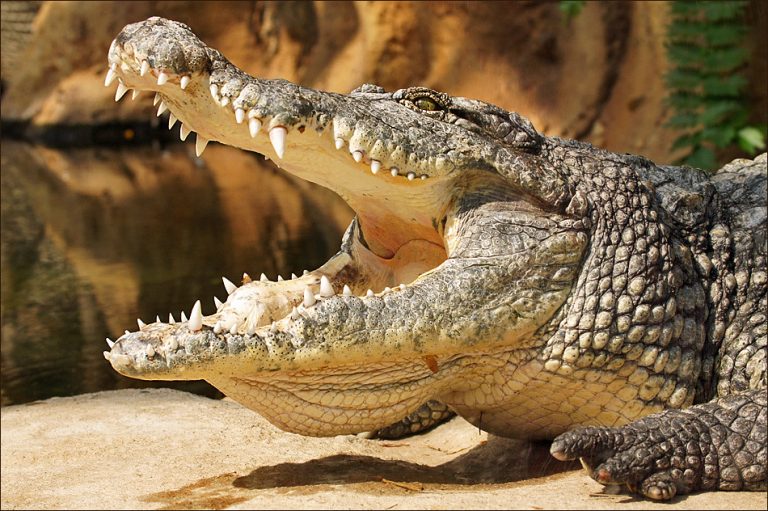
To fully grasp the outer boundaries of how long do crocodiles live, we can look to documented historical records of iconic individuals that have shattered baseline lifecycle expectations.
- Cassius (Saltwater Crocodile): Believed to have been over 110 to 120 years old before his passing in late 2024, Cassius was a colossal 5.48-meter (18-foot) giant captured in Australia. His immense age was evident from his heavily scarred hide, missing leg, and blunt snout, acquired during decades of brutal territorial warfare in the wild.
- Henry (Nile Crocodile): Currently residing in South Africa, Henry is officially recognized as the world’s oldest known living crocodile. Hatched in the wild Okavango Delta in 1900, Henry has lived through two World Wars, outlasted generations of human caretakers, and is currently over 126 years old. He measures over 5 meters in length and continues to display remarkable vitality.
- Mr. Freshy (Freshwater Crocodile): Living in an Australian sanctuary, this resilient reptile reached an estimated age of 120 to 140 years despite surviving multiple gunshot wounds inflicted during his early life in the wild.
Why Wild vs. Captive Lifespans Diverge
When evaluating the data on how long do crocodiles live, a distinct divergence appears between wild populations and those kept in professionally managed sanctuaries.
In a controlled zoo or sanctuary setting, the baseline hazards of the natural world are entirely removed. Captive crocodiles are provided with a consistent, vitamin-enriched diet, eliminating the energy-draining demands of prolonged hunting and seasonal starvation. They are insulated from territorial conflicts with younger, more aggressive rivals, and they receive advanced veterinary care for wounds or infections. Consequently, captive crocodiles routinely experience a lifespan expansion of 30% to 50% beyond their wild counterparts, frequently sailing past their 110th birthdays with pristine cellular health.
Experiencing the Giants: The Nile Crocodile Paradigm
There is a vast difference between studying crocodilian longevity in a textbook and sitting meters away from a five-meter, 90-year-old living dinosaur as it launches an explosive ambush attack from the muddy depths of an African river.
To witness these centenarian survivors operating at the absolute peak of their evolutionary power, one must travel to the remote, raw wilderness of East Africa. Specifically, Murchison Falls National Park in Uganda stands as the world’s premier geographical hotspot for giant Nile crocodiles.
Here, the historic River Nile is squeezed through a microscopic 7-meter gorge before plunging 43 meters into the “Devil’s Cauldron” below. This thunderous hydraulic action creates an ecological phenomenon known to local trackers as the “Crocodile Bar”—a massive, permanent congregation site where hundreds of senior Nile crocodiles cluster along the sandbanks to intercept fish that have been stunned by the sheer, crushing force of the waterfall.
To guide you into the heart of this ancient reptilian kingdom, we have designed the definitive luxury-expedition itinerary: a highly focused, six-day immersive tracking and big-game wilderness journey.
The Definitive 6-Day Murchison Crocodile Tracking & Wildlife Safari
This specialized, high-octane itinerary is crafted specifically for travelers who want to observe, photograph, and analyze the world’s oldest and largest wild Nile crocodiles in their natural habitat, while simultaneously exploring Uganda’s iconic “Big Five” savannah wildlife tracks.
Day-by-Day Expedition Itinerary
- Day 1: Entebbe to Kampala —> Day 2: Ziwa Rhinos to Murchison —> Day 3: Bottom of the Falls Cruise
- Day 6: Return to Entebbe <— Day 5: Albert Delta Exploration <— Day 4: Northern Buligi Tracks
Day 1: Arrival at Entebbe International Airport & Transfer to Kampala
Your expedition begins the moment you touch down at Entebbe International Airport, situated on the lush, forested shores of Lake Victoria. After clearing immigration, you will be met by your expert, private 4×4 safari guide and transferred through the bustling capital city of Kampala to your luxury lodge.
During the evening dinner briefing, your guide will outline the unique micro-ecosystems of the Albertine Rift Valley and prepare you for the prehistoric encounters awaiting you upcountry.
- Accommodation Options: The Serena Hotel Kampala (Luxury) or Latitude 0° (Boutique).
- Meal Plan: Dinner.
Day 2: Journey North via the Ziwa Rhino Sanctuary Foot Safari
At 6:30 AM, embark in your customized 4×4 safari land cruiser and drive north through the rolling green landscapes of the Nakasongola district. Your first major wildlife tracking destination is the Ziwa Rhino Sanctuary, a pristine 7,000-hectare savannah woodland that harbors Uganda’s only wild population of southern white rhinos.
Led by an expert armed ranger, you will head out on foot to track these 2-ton mammalian tanks through the bush, approaching to within 15 meters for unmatched photographic opportunities. After a traditional lunch in Masindi town, you will cross the southern gates of Murchison Falls National Park, driving through the towering mahogany canopies of the Budongo Forest before descending to the banks of the roaring Victoria Nile.
- Accommodation Options: Nile Safari Lodge (Ultra-Luxury) or Paraa Safari Lodge (Luxury).
- Meal Plan: Breakfast, Lunch, Dinner.
Day 3: The Bottom of the Falls Boat Launch & The “Crocodile Bar”
This morning is dedicated to the primary objective of your expedition. Board a specialized river launch boat and cruise upstream against the powerful current of the Victoria Nile, heading directly toward the base of the world’s most powerful waterfall.
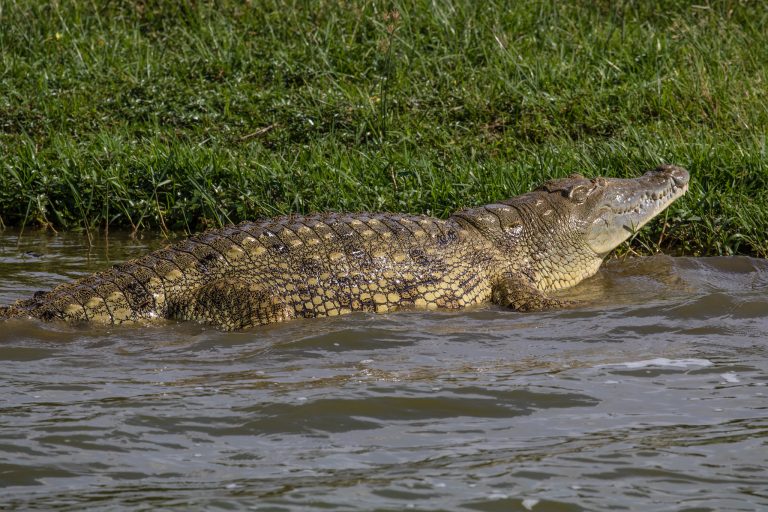
As the boat nears the churning pools of the Devil’s Cauldron, you will enter the legendary “Crocodile Bar.” Here, the riverbanks are packed with immense, senior Nile crocodiles—many measuring between 4.5 and 5.5 meters in length and tracking close to a century in age. You will observe their unique thermodynamic behaviors, such as “mouth-gaping” (basking with open jaws to regulate body temperature), and watch them effortlessly glide through currents that would capsize standard watercraft.
In the afternoon, disembark at the base of the canyon for a dramatic, guided 1-hour trek up the rocky cliffs to the Top of the Falls. Stand directly over the narrow 7-meter fissure where the entire Nile River explodes into a frothing, rainbow-framed abyss. Your guide will meet you at the summit and transfer you back to your lodge for an evening sundowner.
- Accommodation Options: Nile Safari Lodge (Ultra-Luxury) or Paraa Safari Lodge (Luxury).
- Meal Plan: Breakfast, Lunch, Dinner.
Day 4: Sunrise Savannah Game Drive & Night Safari in Buligi Tracks
Cross the Nile to the northern bank for an intensive 4-hour sunrise game drive across the iconic Buligi Game Tracks. This open, rolling acacia savannah is bounded by the Albert Nile and hosts the world’s highest concentration of endangered Rothschild’s giraffes.
With the assistance of a spotter, you will track massive herds of Cape buffaloes, African elephants, Jackson’s hartebeests, waterbucks, and elegant Uganda kobs. The morning light provides prime conditions for tracking apex mammalian predators, including pride of lions and elusive leopards resting in old-growth fig trees.
Return to the lodge for a midday siesta and a luxurious lunch overlooking the river. At 7:00 PM, re-board your vehicle for an exhilarating Night Game Drive. Utilizing specialized spotlights, you will explore the nocturnal world of the park, tracking active predators like spotted hyenas, leopards, servals, genets, and nightjars on the hunt.
- Accommodation Options: Pakuba Safari Lodge (Mid-Range) or Paraa Safari Lodge (Luxury).
- Meal Plan: Breakfast, Lunch, Dinner.
Day 5: Deep-Water Albert Delta Boat Expedition for Giant Crocodiles and Shoebills
Today, you will explore a completely different aquatic ecosystem by taking a private, slow-moving boat downstream toward the Nile-Lake Albert Delta. Where the fast-flowing Victoria Nile empties into the tranquil waters of Lake Albert, a vast, papyrus-choked wetland delta forms.
This marshy environment serves as the primary nesting and breeding ground for Murchison’s oldest crocodiles. Because the water here is shallow, warm, and packed with massive Nile perch and lungfish, the senior crocodiles in this sector are exceptionally thick, heavy, and active.
Furthermore, the Albert Delta is globally renowned as the best place to spot the prehistoric, highly endangered Shoebill Stork. You will spend the morning tracking this rare, dinosaur-like bird as it stands motionless in the papyrus swamps, hunting lungfish alongside giant crocodiles. Spend your final evening enjoying a luxury bush dinner under the equatorial stars.
- Accommodation Options: Nile Safari Lodge (Ultra-Luxury) or Paraa Safari Lodge (Luxury).
- Meal Plan: Breakfast, Lunch, Dinner.
Day 6: Primate Tracking in Budongo Forest & Return to Entebbe
On your final morning, bid farewell to the Nile and drive to the high-altitude canopy of the Budongo Forest Reserve. Strap on your hiking boots for an immersive chimpanzee tracking excursion through pristine, old-growth rainforest. Guided by expert primatologists, you will track a habituated community of wild chimpanzees, observing our closest living relatives as they vocalize, socialise, and swing through the mahogany canopies.
Following the trek, begin your return journey south across the equator line, arriving back in Kampala or Entebbe International Airport by late evening to connect with your outbound international flight.
- Accommodation Options: Day room available at Protea Hotel Entebbe (Optional).
- Meal Plan: Breakfast, Lunch.
Essential Safari Logistics and Packing Guide
To ensure maximum safety and comfort while tracking long-lived aquatic giants and navigating the equatorial savannahs of Murchison Falls, adhere to the following preparation matrix:
- Optimal Seasonality: The absolute best time to execute a crocodile-focused safari in Murchison Falls is during the dry seasons (December to February and June to September). During these dry windows, water levels drop slightly, forcing fish into concentrated channels and compelling massive numbers of giant crocodiles to congregate predictably along the remaining sandbanks to bask.
- Camera Gear Recommendations: Crocodiles are best photographed from the safety of a boat launch or vehicle. Bring a DSLR or mirrorless camera equipped with a minimum 70-300mm or 100-400mm telephoto lens to capture crisp, high-definition close-ups of their armored scales, worn teeth, and pupils without encroaching on their flight zone.
- Required Expedition Apparel: Pack lightweight, moisture-wicking neutral clothing (khaki, tan, or olive green). Avoid bright colors, blue, and black, as these colors actively attract biting tsetse flies in the riverine thickets. High-traction, waterproof hiking boots are mandatory for the rocky Top of the Falls trail and the muddy forest tracks of Budongo.
- Health and Hydration Protection: Murchison Falls is a tropical, low-altitude environment. Ensure you have an active prescription for malaria prophylactics, pack a high-DEET insect repellent, and apply a premium broad-spectrum SPF 50+ sunscreen daily to protect against intense equatorial UV rays during open-boat river cruises.
The Verdict: Respecting the Ancient Survivors
When evaluating how long do crocodiles live, it becomes abundantly clear that these creatures are not merely animals; they are living time capsules. A five-meter Nile crocodile floating silently in the currents beneath Murchison Falls today may very well have been swimming in those exact same waters when Victorian explorers first mapped the source of the Nile in the mid-19th century.
Their flawless metabolic design, unbreakable immune defenses, and cellular resistance to the aging process make them the ultimate monuments of evolutionary engineering. By understanding their longevity and experiencing them firsthand in protected strongholds like Murchison Falls National Park, we play a direct, active role in ensuring these prehistoric centenarians continue to rule our planet’s wild waterways for millions of years to come.
Take a Crocodile Tour in Uganda
Uganda’s Murchisonn National Park is one of the few places on earth where you can find Nile crocodiles. Come meet with these huge apex predators of the nile, enjoy boat cruises and see other wildlife like hippos, elephants and more.