
What Do Chimpanzees Eat? A Guide to Primate Nutrition, Foraging Behavior, and Kibale Forest Safaris
Understanding what chimpanzees eat provides a fascinating window into the evolution, intelligence, and daily rhythms of humankind’s closest living relatives. Sharing approximately 98.7% of our DNA, chimpanzees (Pan troglodytes) possess complex dietary preferences and sophisticated foraging techniques that reflect their high cognitive abilities.
For travelers embarking on a Uganda primate safari with Active Uganda Safaris, observing chimpanzees in their natural habitat reveals how central food acquisition is to their social structure, tool development, and daily movement across the forest canopy.
Overview: Are Chimpanzees Omnivores, Herbivores, or Frugivores?
Wild chimpanzees are broadly classified as opportunistic omnivores, though their primary preference is frugivory (fruit eating). While the vast majority of their daily caloric intake comes from plant materials—specifically ripe, sweet fruits—chimpanzees actively seek out insects, small mammals, bird eggs, leaves, seeds, and mineral-rich soils.
| Dietary Category | Estimated % of Overall Diet | Key Examples |
|---|---|---|
| Ripe Fruits (Frugivory) | 60% – 80% | Figs (Ficus spp.), wild berries, Uvariopsis, drupes |
| Leaves, Stems & Pith (Foliage) | 10% – 20% | Young leaves, terrestrial herbaceous vegetation (THV), bamboo shoots |
| Insects & Invertebrates | 5% – 10% | Driver ants, termites, stingless bees, honey, caterpillars |
| Meat & Animal Protein | 1% – 5% | Red colobus monkeys, bushbabies, duikers, bird eggs |
| Seeds, Nuts & Bark | 2% – 5% | Hard seeds, tree bark, cambium layers, oil palm nuts |
| Soil & Minerals (Geophagy) | < 1% | Mineral-rich clay, termitarium soil (for digestion/detox) |
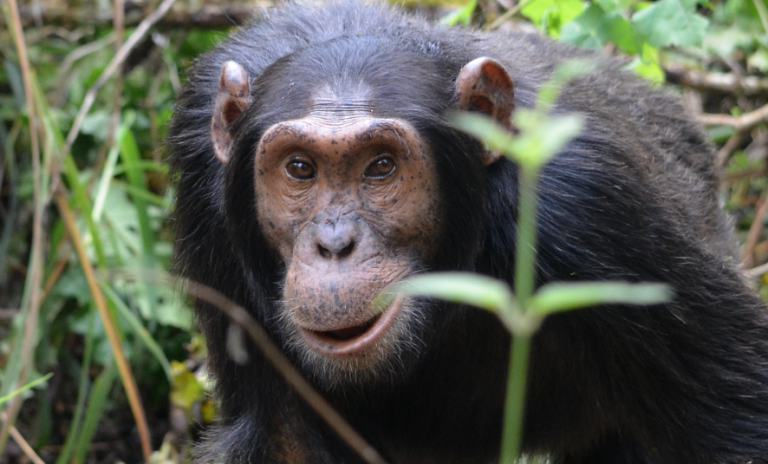
A chimpanzee’s diet is far from static. It fluctuates based on seasonal availability, geographical location, forest elevation, and social dynamics. In dense tropical rainforests like Kibale National Park in Uganda, known as the “Primate Capital of the World,” the abundance of fruiting trees allows chimpanzee communities to maintain a fruit-rich diet year-round.
What Are a Chimpanzee’s Favorite Foods?
If a chimpanzee could choose its dream menu, it would consist almost entirely of ripe, sugary fruits. Ripe fruit offers readily accessible fructose and glucose, providing the rapid energy needed to sustain a chimpanzee’s active lifestyle, which includes climbing trees, defending territory, and engaging in complex social interactions.
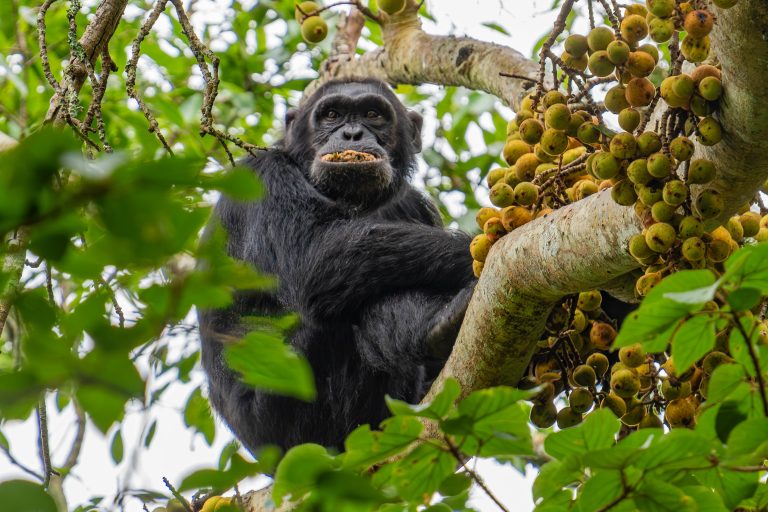
- Wild Figs (Ficus Species)
Wild figs are indisputably the single most vital food resource for chimpanzees across East and Central Africa. Forests like Kibale contain dozens of fig tree species (such as Ficus mucuso, Ficus exasperata, and Ficus sur).
- Year-Round Availability: Different fig species fruit at different times throughout the year, ensuring a steady supply even during broader dry-season fruit shortages.
- Nutritional Density: Figs provide high amounts of natural sugars, calcium, and dietary fiber.
- Social Hubs: A massive fruiting Ficus tree often becomes a central gathering place where multiple sub-groups of a chimpanzee community congregate, feed side-by-side, and groom one another.
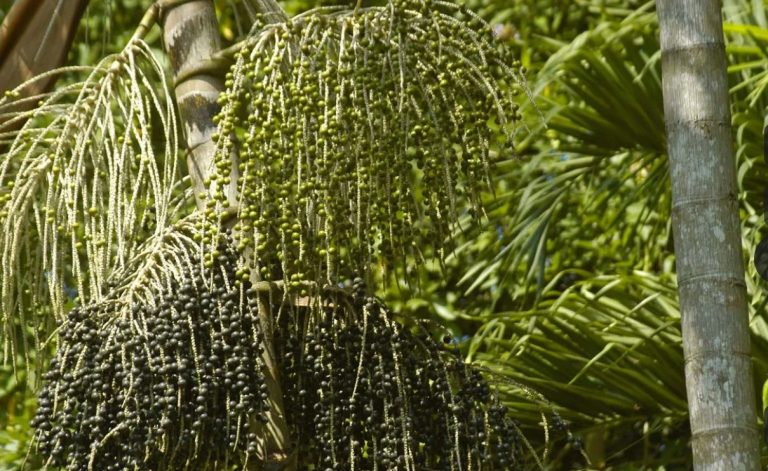
2. Tropical Forest Drupes and Berries
Beyond figs, chimpanzees consume fruits from trees like Uvariopsis congensis, Celtis durandii, and various species of wild plum and nutmeg. Chimpanzees possess exceptional spatial memory, allowing them to remember the precise locations of hundreds of individual trees across their territory and predict exactly when each tree will produce ripe fruit.
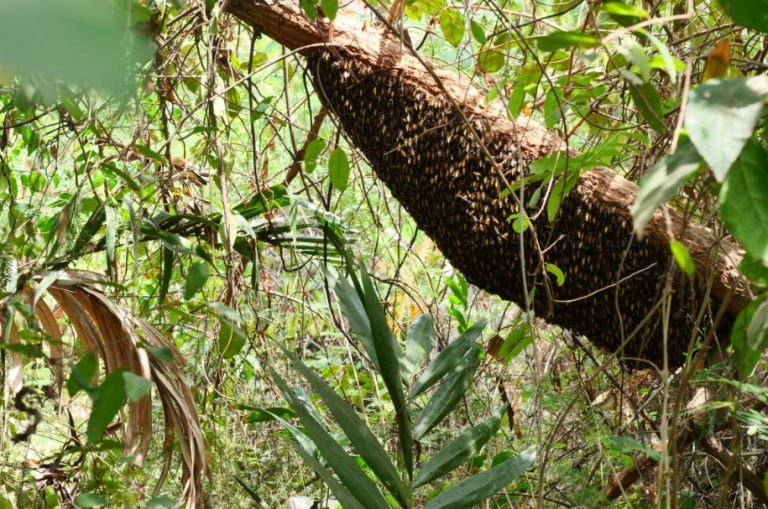
3. Wild Honey
Chimpanzees have an intense craving for sweet flavors, and wild honey is one of their most prized treats. They locate hives built by stingless bees (Trigona) or aggressive African honeybees inside hollow tree trunks. To reach the honey without getting stung excessively, chimpanzees manufacture specialized “dipping sticks” or hammer open rot-softened wood using heavy branches.
The Complete Breakdown of a Wild Chimpanzee's Diet
Foliage: Leaves, Young Shoots, and Pith
When ripe fruit is scarce, chimpanzees turn to foliage as a primary caloric buffer. Young, tender leaves are preferred over mature leaves because they contain higher levels of digestible protein and lower levels of tough lignin and plant toxins.
Chimpanzees also consume the inner pith of plants like wild ginger (Aframomum) and terrestrial herbaceous vegetation. Stripping the tough outer husk with their teeth, they chew the moist, fibrous core to extract water, carbohydrates, and essential minerals.
Insectivory: Ants, Termites, and Caterpillars
Insects are a crucial, energy-dense component of the chimpanzee diet, supplying essential amino acids, fatty acids, and micronutrients like iron and vitamin B12.
- Termites: High in protein and fat, termites (Macrotermes) are harvested using peeled twigs or blades of grass inserted into termite mounds—a classic demonstration of tool use.
- Driver Ants (Dorylus): Known for their painful bites, driver ants are fished out using long, sturdy wooden rods. Chimpanzees dip the stick into an ant column, wait for the ants to swarm upward, and then quickly sweep the ants off the stick directly into their mouths.
- Caterpillars: During seasonal blooms, caterpillars are collected in large quantities from leaves and eaten whole.
Carnivory: Do Chimpanzees Eat Meat?
Yes, chimpanzees are active hunters. While animal meat constitutes only 1% to 5% of their overall annual diet, hunting is a dramatic, highly social event with profound evolutionary significance.
- Red Colobus Monkeys (Procolobus rufomitratus) — ~80% of all prey
- Black-and-White Colobus Monkeys (Colobus guereza)
- Red-Tailed Monkeys (Cercopithecus ascanius)
- Bushbabies (Galagidae)
- Young Forest Duikers & Bushbucks
Hunting Strategy and Social Meat Sharing
Hunting is predominantly conducted by adult males working in coordinated groups:
- Drivers and Blockers: In dense forest canopies like Kibale's Ngogo or Kanyawara sectors, specific male chimpanzees act as "drivers," flushing monkey groups through the branches, while "blockers" intercept escape routes.
- The Ambush: An agile hunter leaps across the canopy to capture the prey, usually dispatched quickly through a bite to the head or neck.
- Meat Sharing and Politics: Meat is a high-value currency in chimpanzee society. The successful hunter (or dominant alpha male) controls the carcass. Other community members beg submissively—extending open palms, whimpering, or grooming the meat owner—to receive a portion. Meat is frequently shared with coalition partners to reinforce political alliances or with receptive females.
Seeds, Nuts, and Tree Bark
- Seeds: Seeds are eaten both enclosed within fruits and extracted from hard pods. Some seeds are cracked open using powerful molars, while others pass whole through the digestive tract.
- Nuts & Bark: In West Africa, chimpanzees use stone and wooden hammers to crack open hard panda and oil palm nuts. In East Africa (including Uganda), nut-cracking with stones is rare, but chimpanzees frequently strip tree bark to chew on the nutrient-rich cambium layer underneath, especially during dry spells.
Medicinal Plants and Soil (Zoopharmacognosy & Geophagy)
Chimpanzees possess remarkable self-medication behaviors, a field of science known as zoopharmacognosy:
- Rough Leaf Swallowing: When suffering from intestinal parasites (such as tapeworms or nematodes), chimpanzees seek out plants with abrasive leaves, such as Aspilia africana. They fold the hairy leaves between their lips and tongue, swallowing them whole without chewing. The rough leaves act like a physical brush, scraping parasites off the intestinal walls.
- Bitter Pith Chewing: Chimpanzees feeling sluggish or unwell chew the bitter pith of Vernonia amygdalina (bitter leaf), which contains bioactive compounds that kill parasite larvae and reduce stomach upset.
- Geophagy (Eating Soil): Chimpanzees intentionally ingest clay-rich soils from termite mounds or kaolin clay pits. Mineral clays absorb dietary toxins, neutralize plant secondary compounds (tannins), and provide essential trace elements like sodium, magnesium, and iron.
How Chimpanzees Find and Prepare Food: Tool Use and Intelligence
Chimpanzees do not merely harvest food; they manufacture tools and employ learned cultural techniques passed down through generations.
Tool Innovations for Foraging:
- Termite Fishing Rods: Stripping side-leaves off a straight stem to create a flexible probe that slides smoothly into narrow mound tunnels.
- Leaf Sponges: Crumpling and chewing a handful of soft leaves to create an absorbent "sponge" that is dipped into deep tree-hollow water pockets to retrieve drinking water.
- Prying Sticks: Heavy levers used to break open rotten logs or beehives hidden inside hollow trees.
- Anvil and Hammer Combinations: Using flat rock surfaces or root buttresses to crack open hard-shelled fruits and seeds.
Ecological Importance: Chimpanzees as Forest Gardeners
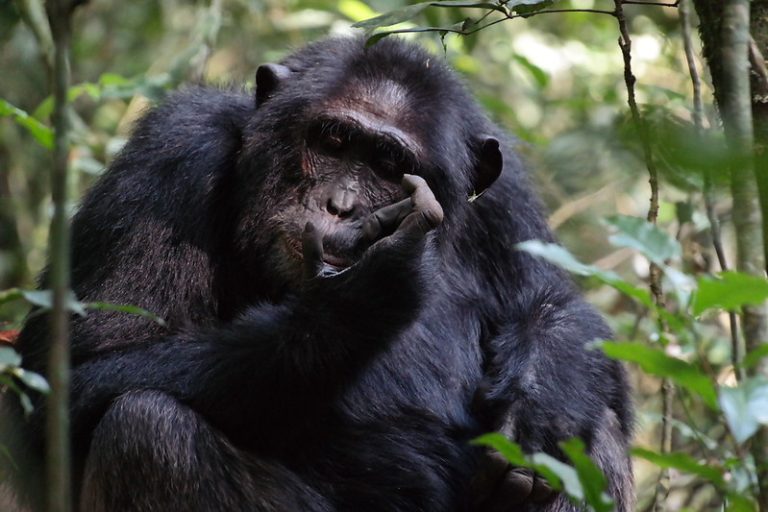
Chimpanzees play a crucial role as primary seed dispersers in tropical rainforest ecosystems.
Because their diet consists predominantly of fruit, chimpanzees swallow thousands of seeds daily. As they travel up to 5–10 kilometers across their home ranges, these seeds are defecated along with natural fertilizer far from the parent trees.
- High Germination Rates: Seeds that pass through a chimpanzee’s digestive tract show significantly higher germination rates than those that drop directly to the forest floor.
- Forest Regeneration: Without chimpanzees, many large-seeded hardwood trees in forests like Kibale would fail to reproduce effectively, leading to reduced tree diversity and altered forest structures.
Comparing Wild Diets vs. Captive Diets
| Feature | Wild Chimpanzee Diet | Captive / Sanctuary Diet |
|---|---|---|
| Primary Base | Wild fruits, figs, leaves, floral buds, pith | Cultivated fruits (apples, bananas), vegetables, commercial primate biscuits |
| Sugar Content | Moderate (wild fruits are high-fiber, low-sugar compared to commercial fruits) | High (if unmonitored; commercial fruits are bred for high sugar) |
| Foraging Effort | High (40%–60% of waking hours spent searching and traveling) | Low to Moderate (provided by keepers, supplemented with puzzle feeders) |
| Protein Sources | Wild prey (monkeys, duikers), insects, termites | Cooked eggs, seeds, nuts, commercial protein supplements |
| Medicinal Herbs | Self-selected (Aspilia, Vernonia, soil) | Formulated veterinary care and antiparasitics |
Seeing Chimpanzees in the Wild: Kibale National Park, Uganda
To witness these feeding behaviors in real life, there is no finer destination on Earth than Kibale National Park in Western Uganda. Known as the "Primate Capital of the World," Kibale spans 795 square kilometers of lush tropical rainforest, swamp, and woodland. It boasts the highest concentration and diversity of primates in Africa, hosting 13 distinct primate species, including an estimated population of over 1,500 wild chimpanzees.
- Chimpanzee (Pan troglodytes schweinfurthii) — ~1,500 individuals
- Central African Red Colobus
- L'Hoest's Monkey
- Black-and-White Colobus
- Ugandan Red-Tailed Monkey
- Blue Monkey
- Olive Baboon
- Grey-cheeked Mangabey
- Nocturnal Species: Bushbabies (Galagos) & Potto
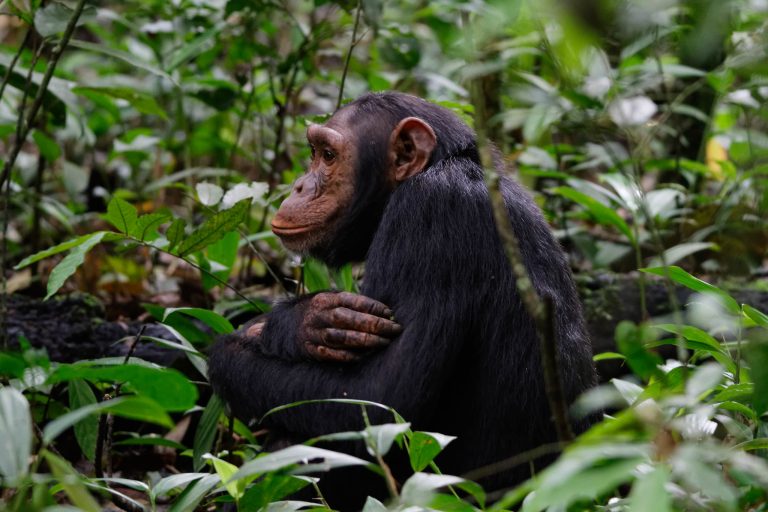
Guided by expert trackers from the Uganda Wildlife Authority (UWA) and Active Uganda Safaris, visitors on a chimpanzee trek often observe chimps descending from the canopy to forage on fallen figs, cracking open seed pods, stripping bark, or grooming after a successful morning feed.
Featured Safari Itinerary: 3-Day Kibale Chimpanzee Trekking & Bigodi Sanctuary Tour
This carefully crafted 3-day safari itinerary by Active Uganda Safaris brings you face-to-face with wild chimpanzees in Kibale National Park while exploring the surrounding crater lakes and community conservation initiatives.
Day 1: Entebbe / Kampala to Kibale Forest & Bigodi Wetland Sanctuary
Approx. 5-6 hours drive | ~310 km- Morning Departure: Pick-up from your hotel or Entebbe International Airport by your expert Active Uganda Safaris driver-guide. Embark on a scenic drive westward through lush green countryside, tea plantations, and traditional homesteads via Fort Portal town.
- Lunch: Enjoy a fresh, farm-to-table lunch overlooking the lush Fort Portal tea estates or upon arrival at your lodge near Kibale Forest.
- Afternoon Bigodi Wetland Walk: Head to the Bigodi Wetland Sanctuary, a community-run conservation initiative bordering Kibale National Park. Guided by a local specialist, walk along wooden boardwalks to spot 8 primate species (including Red Colobus, Grey-cheeked Mangabey, and L'Hoest's Monkeys) and over 200 bird species, including the iconic Great Blue Turaco.
- Evening: Transfer to your eco-lodge for dinner, relax by the campfire listening to the night sounds of the forest, and overnight stay.
- Accommodation Options: Luxury (Kyaninga Lodge / Primate Lodge Kibale / Ndali Lodge), Mid-Range (Turaco Treetops / Kibale Forest Camp), Budget (Isunga Lodge / Chimpanzee Forest Guest House).
Day 2: Ultimate Chimpanzee Trekking in Kibale Forest National Park
Primate Tracking & Forest Ecology Experience- 07:30 AM Briefing: Arrive at the Kanyanchu Visitors Centre for a safety and ecological briefing from Uganda Wildlife Authority (UWA) park rangers.
- 08:00 AM Chimpanzee Trek Begins: Step into the jungle under the soaring canopy of giant Ficus and mahogany trees. Follow expert trackers who use vocalizations (pants-hoots) and fresh feeding evidence (chewed fig pulp, cracked seed pods) to locate a habituated chimpanzee community.
- The 1-Hour Observation: Once located, spend a full magic hour watching the chimpanzees interact. Observe adult males grooming on the forest floor, mothers cradling infants in tree nests, and young chimps swinging through the branches as they forage for wild fruits.
- Lunch: Return to the lodge for a warm lunch and relaxation.
- Optional Afternoon Activity (CHEX): For travelers who want an extended experience, upgrade to the full-day Chimpanzee Habituation Experience, accompanying researchers from dawn till dusk as chimps wake up, feed, and construct new night nests.
- Crater Lakes Sunset Hike: Conclude the afternoon with a walk around the Top of the World viewpoint, offering panorama views of crater lakes set against the backdrop of the Rwenzori Mountains.
- Dinner & Overnight: Same lodge.
Day 3: Fort Portal Cultural Walk / Tea Estate Tour & Return to Entebbe
Approx. 5-6 hours drive- Morning: Enjoy a relaxed breakfast on the lodge veranda overlooking the rainforest canopy.
- Cultural & Community Interaction: Take a guided tour of a local organic tea plantation or visit the Tooro Kingdom cultural sites in Fort Portal town to learn about regional history and sustainable agricultural practices.
- Scenic Return Drive: Depart for Kampala or Entebbe, making a stopover for lunch along the way and photo opportunities at the Equator crossing marker.
- Drop-Off: Arrive in Kampala/Entebbe in the late afternoon or early evening for your onward flight or hotel drop-off.
Essential Travel Tips for Chimpanzee Trekking
1. Best Time to Visit
Chimpanzee trekking in Kibale is available year-round. However, the dry seasons offer the easiest hiking conditions:
- Dry Seasons (Peak): December to February and June to September. Trails are firmer, and rain is less frequent.
- Wet Seasons (High Fruit Abundance): March to May and October to November. While trails can be muddy, chimpanzees often forage closer to the ground during peak fruiting periods, shortening trekking distances.
2. Packing Checklist
- Footwear: Sturdy, waterproof hiking boots with good ankle support.
- Clothing: Long-sleeved shirts and lightweight long trousers (tuck trousers into socks to prevent fire ants from crawling up). Neutral earth-tone colors (green, khaki, brown) are recommended.
- Rain Gear: Lightweight waterproof rain jacket or poncho (rain can fall unexpectedly in tropical rainforests).
- Insect Repellent: High-DEET insect repellent and sunscreen.
- Camera Gear: Camera with a telephoto lens (70-200mm or 300mm) and high ISO performance for low-light forest canopy shots. Flash photography is strictly prohibited.
- Hydration & Snacks: At least 2 liters of drinking water and lightweight energy snacks (dried fruits, nuts).
3. Rules and Guidelines for Tracking Chimpanzees
To protect both visitors and wild primate populations:
- Minimum Distance: Maintain a distance of at least 7 to 8 meters (23–26 feet) from the chimpanzees at all times.
- Health Restrictions: Anyone suffering from a contagious illness (such as a cold, flu, or respiratory virus) is not permitted to trek, as chimpanzees are highly susceptible to human airborne diseases.
- Age Limit: The minimum age for chimpanzee trekking in Uganda is 12 years old.
- Littering & Noise: Carry all trash out of the forest and keep voice levels low to prevent distressing the animals.
Why Book Your Chimpanzee Safari with Active Uganda Safaris?
Planning a seamless East African safari requires local expertise, reliable ground logistics, and deep conservation commitments. Active Uganda Safaris offers:
- Guaranteed Chimpanzee Trekking Permits: We handle all UWA permit bookings and logistics well in advance to ensure preferred dates and tracking slots.
- Expert Local Guides: Professional safari drivers and passionate naturalist guides with decades of field experience across Uganda's national parks.
- Tailor-Made Itineraries: Fully customizable private safaris matching your budget, accommodation style, and fitness levels—combining chimpanzee trekking with gorilla trekking in Bwindi Impenetrable Forest or wildlife drives in Queen Elizabeth National Park.
- Sustainable Tourism: Every safari directly supports community conservation projects surrounding Kibale Forest National Park, helping protect primate habitats for generations to come.
Plan Your Dream Uganda Primate Safari Today
Ready to observe wild chimpanzees foraging, playing, and living in the heart of Kibale Forest? Contact the destination experts at Active Uganda Safaris today to craft your personalized safari itinerary.