
Where Do Silverback Gorillas Live? Inside the Secret World of the Mountain Gorillas
Few wildlife encounters on Earth match the sheer emotional gravity of sitting a few meters away from a massive, 400-pound male mountain gorilla. As the undisputed leader, protector, and defender of his family pack, his silver-furred back symbolizes raw power and wild majesty.
But if you are planning an expedition to see these magnificent primates in the wild, the first critical question you must answer is: where do silverback gorillas live?
Understanding the specific geographic boundaries and the complex ecology of the silverback gorillas habitat is essential to planning a successful trekking safari. These giants are highly specialized creatures that cannot survive in captivity, making their native wild environments the only places on Earth to witness them alive and free.

The Geography: Where Do Silverback Gorillas Live in the Wild?
Wild mountain gorillas do not roam across the entire continent of Africa. Their distribution is restricted to two isolated, small patches of protected mountainous jungle in East and Central Africa.
When answering where do silverback gorillas live, we look exclusively at these two unique regions:
- Bwindi Impenetrable National Park: An ancient, standalone primeval rainforest located in southwestern Uganda that holds roughly half of the entire global mountain gorilla population.
- The Virunga Massif: A dramatic chain of eight volcanic mountains spanning the borders of southwestern Uganda, northwestern Rwanda, and the eastern Democratic Republic of Congo.
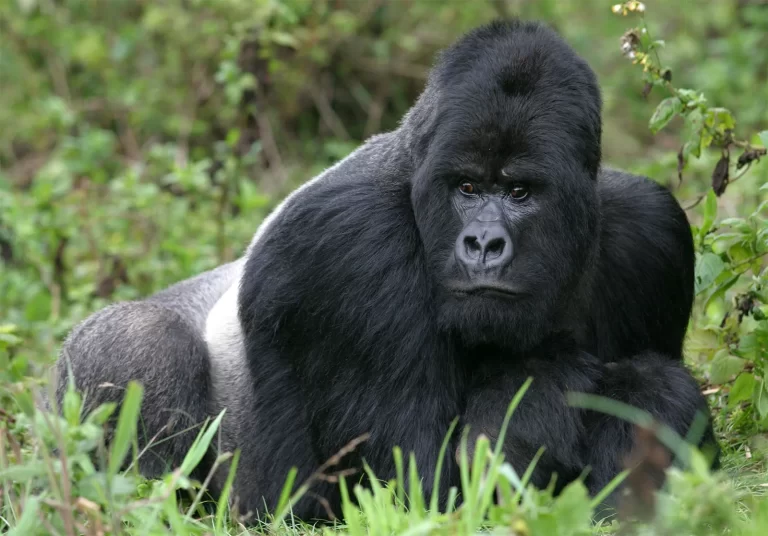
Exploring the Unique Silverback Gorillas Habitat
The silverback gorillas habitat is defined by extreme altitude, high humidity, and dense, tangled vegetation. Unlike their larger cousins, the lowland gorillas, mountain gorillas live at elevations ranging from 2,500 to 4,000 meters (8,000 to 13,000 feet) above sea level.
This high-altitude environment is characterized by:
- Cloud Forests and Bamboo Zones: The mountain slopes are covered in thick bamboo forests and sub-alpine vegetation. The bamboo shoots provide a vital, nutrient-rich seasonal food source for the groups.
- Chilling Temperatures: Because of the elevation, the habitat of silverback gorillas can get incredibly cold, often dropping near freezing at night. To survive here, these gorillas have evolved much longer, thicker, and darker fur than other gorilla subspecies to trap heat.
- An Abundant, Green Buffet: Mountain gorillas are almost entirely herbivorous. The dense montane forest floors provide a constant supply of wild celery, nettles, roots, bark, and leaves, allowing an adult male to easily consume up to 34 kilograms (75 pounds) of vegetation every single day.
Uganda: The Ultimate Habitat of Silverback Gorillas
If you want to explore the finest, most secure examples of the habitat of silverback gorillas, Uganda is the premier global destination. With its strict conservation policies, safe border regions, and vast swathes of protected ancient forest, Uganda offers two distinct environments where you can trek to find a dominant silverback:
1. Bwindi Impenetrable Forest National Park
Bwindi is a UNESCO World Heritage site and an ecological wonder. Because it survived the last ice age, it features a hyper-dense, multi-layered canopy of trees, ferns, and vines. Navigating the silverback gorillas habitat here involves trekking through steep, mist-covered valleys and thick undergrowth where wild mountain gorilla families have nested for thousands of years.
2. Mgahinga Gorilla National Park
Situated on the Ugandan side of the Virunga Massif, Mgahinga protects the slopes of three dramatic, extinct volcanoes: Mount Muhavura, Mount Gahinga, and Mount Sabinyo. The habitat of silverback gorillas in Mgahinga features open bamboo zones that offer incredible, clear visibility for photography when a silverback guides his family through the bamboo clearings.
Explore Our Premium Silverback Gorilla Tours Packages
Now that you know exactly where do silverback gorillas live, it is time to lace up your hiking boots and secure your tracking permits. Because mountain gorilla tracking permits are strictly limited by wildlife authorities to protect the animals from stress, booking your itinerary well in advance is essential.
Premium Gorilla Trekking Safaris (Mountain Gorilla Tours)
3-Day Gorilla Trekking Tour
5-Day Silverback Gorilla & Wildlife tour
6-Day Gorilla, Primates & Wildlife Tour Package
Or: Just contact us For A Custom Package
Tell us about your gorilla and wildlife adveture dreams and our local experts ill curate for you a perfect package to fit your taste.
Frequently Asked Questions About the Habitat of Silverback Gorillas
1. Can silverback mountain gorillas survive in zoos?
No. Every single mountain gorilla you see in a zoo anywhere in the world is a lowland gorilla. Historically, all attempts to keep mountain gorillas in captivity have failed due to their highly specific dietary needs and stress factors related to their unique high-altitude silverback gorillas habitat. To see a mountain silverback, you must travel to their native African montane forests.
2. What is the best time of year to visit the habitat of silverback gorillas?
While gorilla trekking is a year-round activity in Uganda, the best time to visit is during the dry seasons: June to August and December to February. During these months, the forest trails are less muddy, and the steep slopes of the montane forests are easier to navigate.
3. Is the terrain difficult when tracking gorillas?
Yes, the natural habitat of silverback gorillas is rugged, steep, and can be physically demanding. Treks can last anywhere from 1 to 6 hours depending on where the silverback moved his family the previous night. However, professional porters are always available at the park headquarters to assist with daypacks and navigate tough terrain.